
Why the COVID-19 Crisis is a Catalyst for Digital Transformation
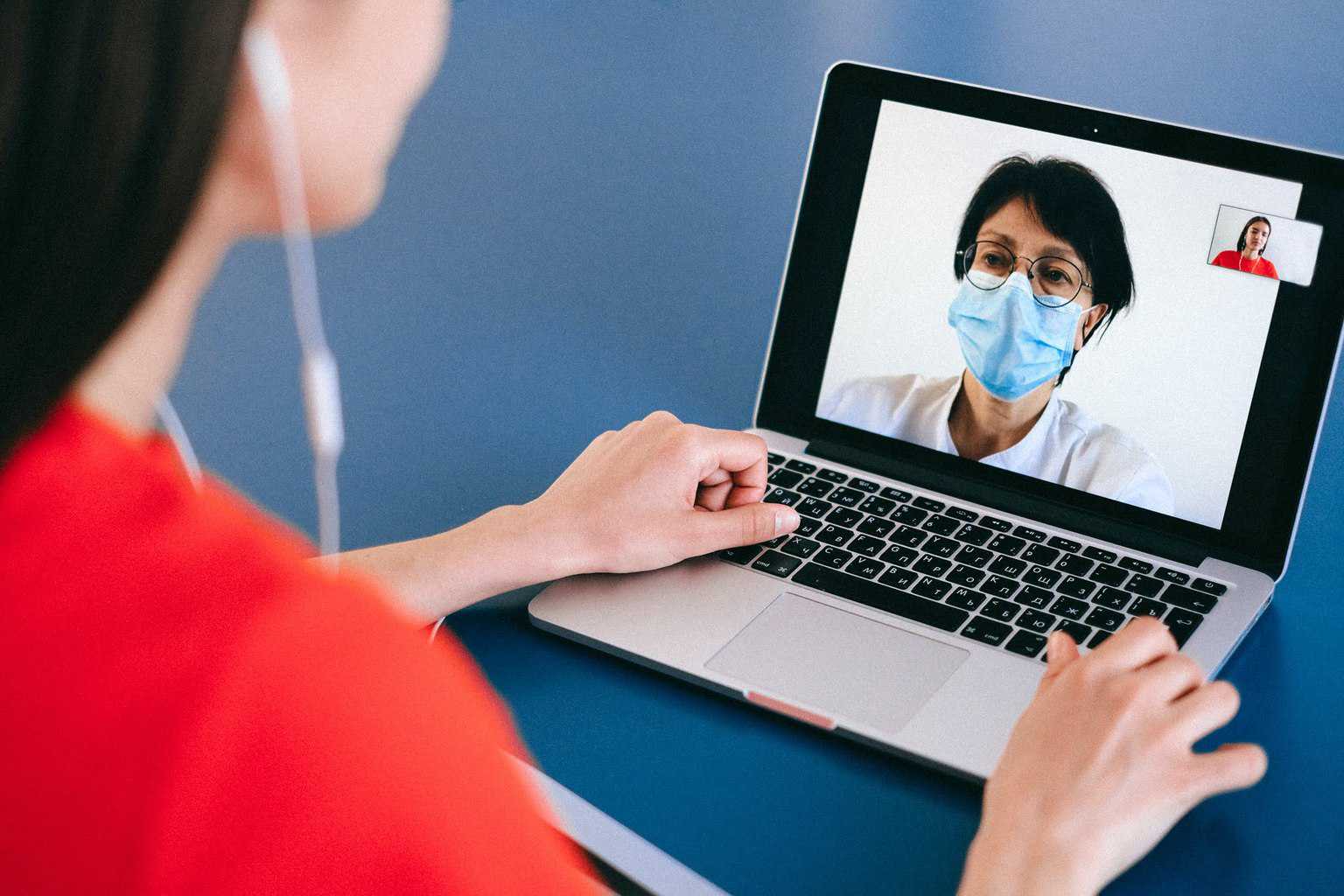
The COVID-19 outbreak has made a seismic impact on people's memories. Businesses around the world have had to take work-from-home or social-distancing measures — or even temporarily cease operations. Digital transformation is essential with regards to operational resilience for enterprises as the COVID-19 crisis continues to affect the world economy.
The pandemic continues to cause political and economic turmoil and is affecting business operations. Some businesses have indeed been able to play to their strengths. Others are now taking digitization seriously.
Growing demand for secure cloud solutions
Just as businesses were beginning to recognize adoption of ‘the cloud’ as a vital catalyst for business transformation, the COVID-19 pandemic outbreak has made it a key enabler to ensure business continuity. During these challenging times, the cloud's power to transform backup data into an asset, making it more open and accessible, can help organizations gain critical insights into uncovering opportunities and expediting decision making.
Even so, with more workers connecting remotely to work from home, cloud adoption without data protection could be ineffective. Cloud data protection systems are a must as they can ease data complexity, provide a central point of access, increase data visibility, reduce legal and regulatory risks and save costs.
Businesses must set up a foundation for data protection
Businesses are helping employees to work from home to try and safeguard business continuity and security. Simplifying data backup and recovery is one of the measures that can be taken in order to make the data management and accessibility process easier and faster (especially when the entire company connects remotely). While conventional backup systems are both cost-intensive and time-consuming, the backup process can be accelerated through a cloud data protection system.
There is a shift in digital security priorities
In the face of cybercrime, the need for safety and security remains paramount. However, to bring about change and realize the scale and potential of digitalization for industries, one might need to be more open. Building a wall, whether physical or virtual, hampers data, information, and knowledge exchange. These are the foundations of the digital world and it's the speed at which we can turn that knowledge into an important product that really matters.
In order to bring about change, trust must be created not only in the data itself (especially when critical decisions are based on it) but also in those who use the data. Scandals like the Cambridge Analytica incident have lessened our trust in such things. This ultimately leads to the need for behavioural change and system modernization within the industry and among policy-makers.
It is a cultural transition of epic proportions that must happen if we are to realize the potential of the digital era.
There's a sense of urgency to move forward
For many corporations, speeding up their digital transformation is the only option. That involves moving from abstract conceptualization to active scale-up, backed by continuous testing and continual learning. These moves should take place in two areas: at the core of the company and through new business development.
Despite the enormous difficulties that CEOs manage today, it's time to act now. In fact, we've seen that the significant decrease in travelling time has provided more time for CEOs and their top teams to focus on new initiatives. For example, a leader at a large bank recently said they were finally getting around to deploying a major Customer-Relationship-Management (CRM) program that they had no time for before. Given how rapid the change that’s taking place is, it might be too late to wait until you see signs of recovery.
Besides, businesses also start to recognize the fact that physical document signing is no longer just a disruption for a month or two of pandemic lockdown period, but a sustained challenge for any activity that relies on face-to-face workflow. Just among Innov8tif’s clientele, we have witnessed the following problem statements related to document signing:
-
How could a mobile network operator seal postpaid subscription contracts with customers, truly online while still legal-binding and complying to Malaysia’s Digital Signature Act 1997?
-
How could the authorized signatory of a MNC who is subject to stringent audit requirements, approve payment instructions online while addressing the need for non-repudiation requirements?
Such requirements can be easily accomplished with document approval workflow which addresses digital workflow routing needs, plus a seamlessly integrated digital signing solution that accomplishes legal binding document signing, and even enhanced biometrics authentication to provide additional level of confidence towards the identity proofing process. It sounds like a complex solution, but it has been simplified by Innov8tif with an out-of-the-box offering.
Enterprises must accept the new digitized norm
Prominent economies are already looking at confining themselves and carefully thinking about how individuals will move around. This phase might be long (possibly two years) for businesses, uncertain and will have a lasting effect on corporate roadmaps and organizations. In concrete terms, most corporations are likely going to face uncertainty and economic recession.
Remote work has become the new norm. Flexible working will become the norm for most organizations as it is the simplest solution for helping to watch out for the daily well-being of workers. As a result, company roadmaps and digital customer experiences are likely to be effected within the next 18 months. Workflow gives you the power to work better — no matter the circumstances. So employees can be productive, wherever they are. And customers can get what they need, when they need it.
As the COVID-19 crisis continues taking a toll on the world economy and affecting business operations, digital transformation is crucial. With most people isolating themselves at home and working from home, more businesses are now taking digitization seriously. The COVID-19 pandemic has become a catalyst for digital transformation.
Related articles

Spotting Fake IDs: How Hologram Tech Keeps Online Sign-Ups Safe
Fraud Prevention Best Practices: Staying Ahead in the Digital Age
Fraud has evolved into one of the most pressing challenges for businesses in the digital age, specifically in industries where trust and identity verification are critical, such as banking, insurance, telecommunications, and e-commerce. Fraudsters are after one thing, and one thing only: your perso

Fraud Prevention in the Digital Age: How AI is Transforming the Fight Against Scams
The onset of the digital age has ushered in remarkable innovations that we never would have thought possible a decade ago. Everything, from the way we work to the way we live our daily lives, has been drastically streamlined by technological advances. However, this progress comes with a double edge