
What Is Optical Character Recognition?
In the realm of digital transformation, one technological marvel that stands out is Optical Character Recognition (OCR). OCR serves as a bridge between the physical and digital worlds by revolutionising the way we view and handle texts.
What is Optical Character Recognition?

Optical Character Recognition is a sophisticated technology that converts printed or handwritten text into machine-readable data. In simpler terms, OCR allows computers to interpret and recognise characters from scanned images or documents and turns them into editable and searchable text.
How Does Optical Character Recognition Work?
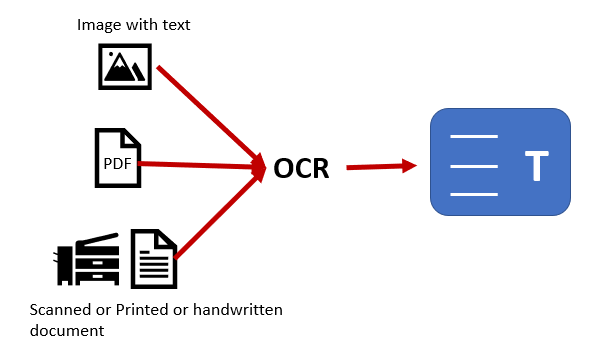
OCR employs a combination of pattern recognition, artificial intelligence, and machine learning algorithms to analyse images and identify characters. The process typically involves several key steps.
Image Acquisition
The first step is to obtain a digital image of the text through scanning or photography. This can be images taken from a written document, letter, text, photograph, or any form of physical document that contains words.
Pre-processing
The captured image will undergo pre-processing to enhance its quality. This may include enhancement methods such as noise reduction, image alignment, and contrast adjustments.
Segmentation
OCR then separates the text into individual characters or words, recognising the boundaries between them.
Feature Extraction
Features like shape, size, and spatial relationships are extracted from the segmented characters to create a unique profile for each.
Recognition
The extracted features are compared to a pre-existing database or trained model to identify the characters. Machine learning algorithms play a crucial role here, continually improving accuracy with more data.
Text Extraction
The extracted text is then converted into a machine-encoded format that can be used by computer systems to handle further processing.
What Are The Different Types Of Optical Character Recognition?
1. Simple OCR Software
A simple OCR system will store a variety of font and text image patterns as templates. The OCR software will then use pattern-matching algorithms to compare text images (word by word) to an internal database.
This solution has limitations because there are virtually unlimited font and handwriting styles, and every single type cannot be captured and stored in the database.
2. Intelligent Character Recognition Software
Modern OCR systems use intelligent character recognition (ICR) technology to read the text in the same way humans do. This method trains machines to behave in a way humans do by using machine learning software.
A machine learning system called a neural network analyses the text over many levels, processing the image repeatedly. It looks for different image attributes, such as curves, lines, intersections, and loops, and combines the results of all these different levels of analysis to get the final result.
Even though ICR typically processes the images one character at a time, the process is fast, with results obtained in seconds.
3. Intelligent Word Recognition
Intelligent word recognition systems work on the same principles as ICR, but process whole word images instead of preprocessing the images into characters. Intelligent Word Recognition is the recognition of unconstrained handwritten words, recognising entire handwritten words or phrases instead of character-by-character like simple OCR technology.
IWR technology matches handwritten or printed words to a user-defined dictionary which significantly reduces character errors encountered in typical character-based recognition engines.
4. Optical Mark Recognition
Optical Mark Recognition (OMR) recognises the marks made on paper documents, such as forms with checks, bubbles, or boxes.
It allows for the quick and accurate capture of information from paper forms, making it ideal for high-volume data collection. This includes tests, surveys, elections, questionnaires, and various other forms of documents.
Applications of OCR:
<li><strong>Document Digitisation:</strong> OCR is extensively used to convert printed documents into editable and searchable digital formats. This is particularly important for industries dealing with large volumes of paperwork, such as legal, healthcare, and finance.</li>

<li><strong>Data Extraction:</strong> Businesses can leverage OCR to extract specific information from documents, invoices, and forms. This helps to streamline data entry processes and reduces the risk of errors.</li>

<li><strong>Text-to-Speech Technology:</strong> OCR is a fundamental component of text-to-speech applications, enabling the conversion of printed or handwritten text into audible speech.</li>

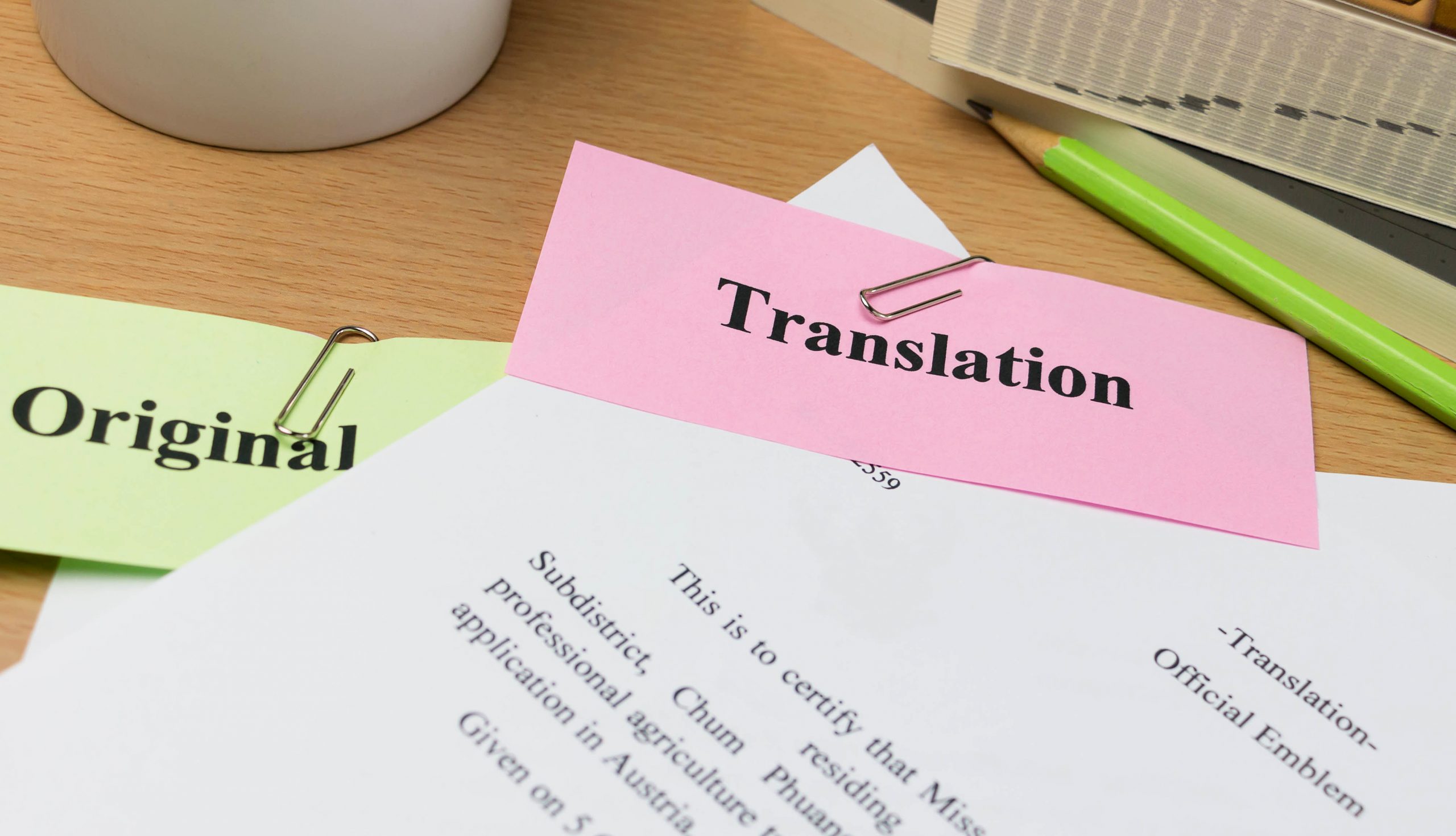
<li><strong>Translation Services:</strong> In the realm of language translation, OCR plays a pivotal role by enabling the conversion of printed or written text into digital formats that can be easily translated.</li>

<li><strong>Accessibility:</strong> OCR contributes significantly to making content accessible for individuals with visual impairments by converting printed or handwritten text into readable formats.</li>
Bottom Line
In essence, Optical Character Recognition (OCR) stands as a transformative technology bridging the physical and digital realms, employing advanced algorithms and machine learning to convert printed or handwritten text into machine-readable data.
Its diverse applications, from document digitisation and data extraction to text-to-speech and translation services, underscore its pivotal role in reshaping how we interact with and leverage textual information across various industries. ultimately enhancing efficiency and accessibility in the handling of textual data.
The journey of OCR is far from over, with ongoing advancements ensuring that this transformative technology remains at the forefront of the digital revolution.
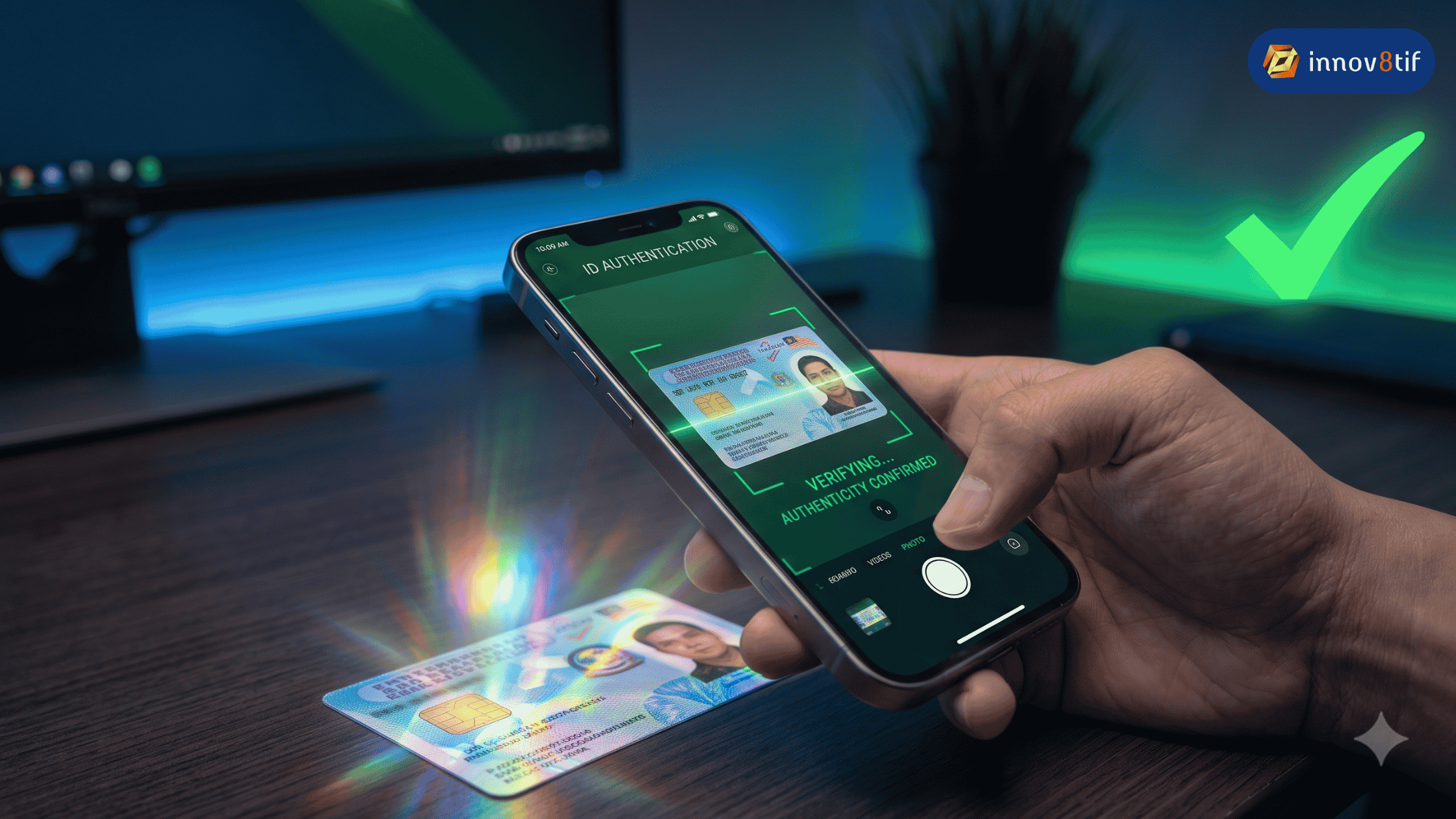
OCR is not just limited to the mere extent of convenience — its power can also be harnessed to help in digital security processes. Within our EMAS eKYC system, OCR plays a vital role in extracting information from a person’s ID card during the ID verification process.
Using optical character recognition (OCR) technology, OkayID then extracts the relevant information, such as address and income details from a person’s ID document.
Innov8tif is committed to utilising the newest technologies to help businesses streamline their onboarding processes and to bolster security against fraudulent attempts.
To learn more about how we implement OCR into our proof of income and address services, feel free to read our other article.
Or
Sign up for our free newsletters here
Related articles
Spotting Fake IDs: How Hologram Tech Keeps Online Sign-Ups Safe
Fraud Prevention Best Practices: Staying Ahead in the Digital Age
Fraud has evolved into one of the most pressing challenges for businesses in the digital age, specifically in industries where trust and identity verification are critical, such as banking, insurance, telecommunications, and e-commerce. Fraudsters are after one thing, and one thing only: your perso
Fraud Prevention in the Digital Age: How AI is Transforming the Fight Against Scams
The onset of the digital age has ushered in remarkable innovations that we never would have thought possible a decade ago. Everything, from the way we work to the way we live our daily lives, has been drastically streamlined by technological advances. However, this progress comes with a double edge