
3 Methods to Read MyKad
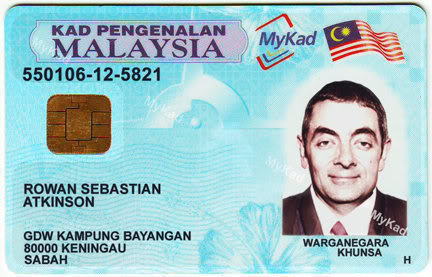
MyKad, sometimes misspelled as “my card”, is a Malaysian identity card issued to citizens aged 12 and above. Malaysian permanent resident, Malaysian Armed Forces personnel, and Malaysian Police personnel are also issued variations of myKad with similar features, known respectively as MyPR, MyTentera, and MyPolis. These are unique ID cards for the average Malaysian citizen.
MyKad was introduced by the Malaysian government on 5 September 2001 as one of four MSC Malaysia flagship applications. Malaysia is one of the first countries in the world to incorporate both photo identification and fingerprint biometrics on a built-in computer chip embedded within the identification card.
Method 1: Read Data from MyKad Chip
This is the most reliable method in the digital application process. To read MyKad data from the chip or smart card, you will need the following components:
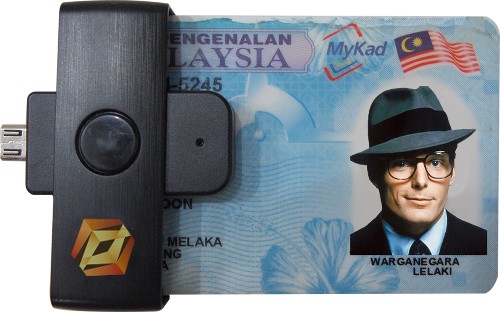
<li>The reader hardware. Some commercially available options are listed from multiple websites such as: <a href="http://mobilemykad.com/" target="_blank" rel="noopener">mobilemykad.com</a></li>

<li>A software specially programmed to support MyKad analysis on an established operating system – such as Windows, Android, and iOS.</li>
Pros:
<li><strong>Reliable and accurate data retrieval</strong> -  as long as the chip, reader, and software are working correctly.</li>

<li><strong>Less susceptible to fraud</strong> - Printing a fake MyKad that looks similar to a genuine copy is easy, but it is more challenging to produce a fraudulent chip that is embedded within the MyKad itself. Thus, procuring a replacement card has to be handled by the national registration department.</li>

<li><strong>It is quick</strong> - It only takes a few seconds to retrieve personal information and identification details from a MyKad holder.</li>

<li><strong>You can retrieve additional personal data that is not visibly printed on the card</strong> – such as religion and place of birth.</li>

<li><strong>This same technique can be used</strong> to scan data from a Malaysian passport as well.</li>
Cons:
<li><strong>A hardware reader is required</strong>. This may introduce further considerations such as hardware wear-and-tear.</li>

<li>When a chip is worn-out or broken, <strong>it will not be readable</strong>.</li>
Method 2: Scan Data from Card Surface
This method is technically known as OCR (optical character recognition). You can read up more about how OCR works, from our previous post . In a nutshell, OCR involves an image processing process, to recognise and extract printed text from a photo/image of the card surface.
Pros:
<li>It can be very portable and offers the added benefit of convenience. Mobile device cameras can serve as a MyKad reader with their built-in input for OCR. The scanning process can be conducted within any mobile device (e.g. Android, iOS) without requiring dedicated hardware. <a href="/products/customer-onboarding-ekyc/mobile-id-ocr-sdk/" target="_blank" rel="noopener">Click here to find out more about commercially available technology that supports MyKad OCR on mobile</a>.</li>

<li>Supports pre-filling. By scanning the printed details such as MyKad number, you can save the data entry time by a few minutes. The user only needs to check the pre-filled details and make the necessary corrections, instead of a complete self-registration.</li>
Cons:
<li>It is not always accurate. OCR is only used to support the pre-filling of a form, not to be expected as a solution to the verification process. Some noises such as lighting reflection, can affect the accuracy of the identification process.</li>

<li>No authenticity check. With technology today, it is possible for a fraudulent card to be printed at the same, or very similar quality to a genuine card. OCR scanning is not able to differentiate between a genuine and a fraudulent card.</li>
Method 3: Read with Human Eyes
This method is self-explanatory. Sometimes the best solution to read the finer details on an ID card is to simply look at it with your own eyes. As simple details are simple enough to be discerned by the naked eye — this is often the first step before turning to dedicated hardware/software for more in-depth analysis.
Pros:
<li>No additional technology cost is to be invested.</li>

<li>Human eyes are good at recognising and differentiating watermarks.</li>
Cons:
<li>Susceptible to human data entry errors.</li>

<li>Many times slower than machine (e.g. chip reading and OCR scanning).</li>
Method 4: NFC/Mifare Scanning?
Even though MyKad has an embedded Mifare chip, it is meant for Touch ‘n Go use case – not as a medium to store personal identification details.
At Innov8tif, our proprietary OkayID and OkayDOC APIs are specialised in reading and verifying the authenticity of the Malaysian MyKad. The OkayID module first identifies the document type of the captured ID Document, such as a driving license or national ID card. It then extracts user information from the ID document. OkayDoc is the Document Authentication module of EMAS eKYC. It verifies whether a user-submitted ID document is genuine, legitimate, and authentic.
To get in touch with us, feel free to:
Contact us at sales@innov8tif.com
or
Subscribe to our free whitepapers and newsletter here
To learn more about certain topics within the realm of cybersecurity or if you are simply interested in taking a deeper dive into our solutions, feel free to visit our dedicated wikipage.
Related articles
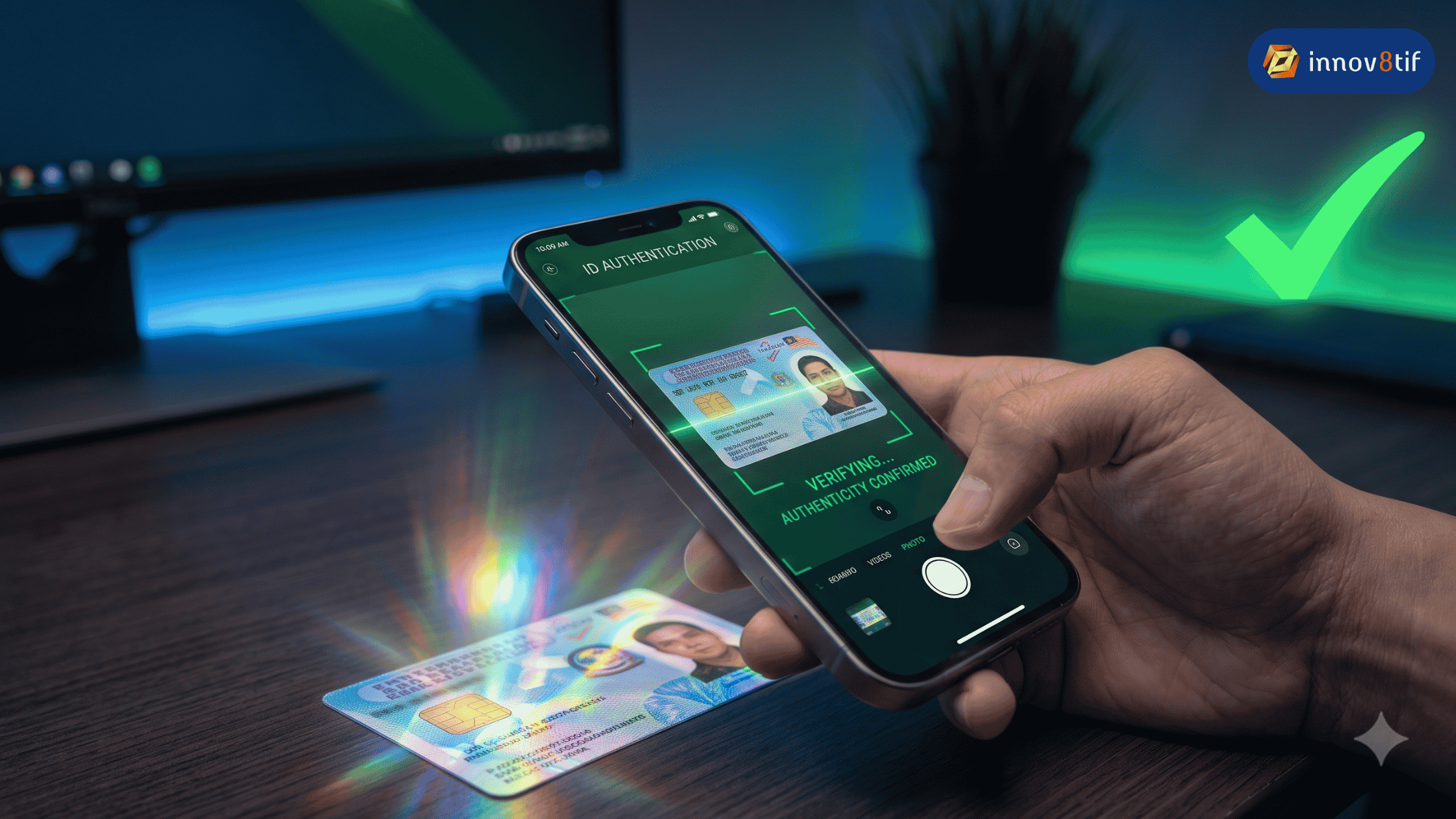
Spotting Fake IDs: How Hologram Tech Keeps Online Sign-Ups Safe
Fraud Prevention Best Practices: Staying Ahead in the Digital Age
Fraud has evolved into one of the most pressing challenges for businesses in the digital age, specifically in industries where trust and identity verification are critical, such as banking, insurance, telecommunications, and e-commerce. Fraudsters are after one thing, and one thing only: your perso

Fraud Prevention in the Digital Age: How AI is Transforming the Fight Against Scams
The onset of the digital age has ushered in remarkable innovations that we never would have thought possible a decade ago. Everything, from the way we work to the way we live our daily lives, has been drastically streamlined by technological advances. However, this progress comes with a double edge