
What Are The Privacy Concerns Of Facial Recognition?
Facial recognition technology is an emerging authentication tool with the ability to identify individuals by analysing their unique facial features. This technology has become increasingly prevalent across various industries, finding applications in security and law enforcement, smartphone authentication, and even enhancing user experiences.
While facial recognition has been proven to be an effective authentication tool, it also has potential disadvantages — mainly related to the issue of user privacy.
How Does Facial Recognition Work?
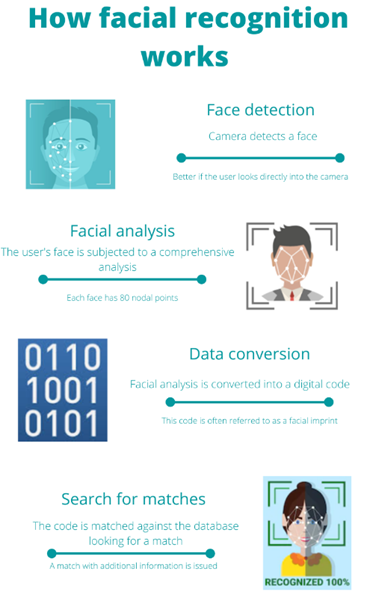 Image retrieved from: https://atmeye.com/blog/face-recognition-atm/
Facial recognition technology uses advanced algorithms to capture, analyse, and compare facial data from images or video footage. It identifies key facial landmarks, such as the distance between the eyes, and the shape of the nose to create a unique facial template or "faceprint." This template is then matched against a database of known faces, allowing for identification or verification.
What Are The Privacy Concerns For Facial Recognition?
Facial Recognition Privacy has emerged as a significant concern for privacy regarding instances of data breaches, unconsented data collection, and invasive surveillance, among others.
These concerns are valid as people naturally dislike the feeling of being constantly under surveillance. There is also much cause for worry regarding the possibility of their personal information being exposed during a cyberattack.
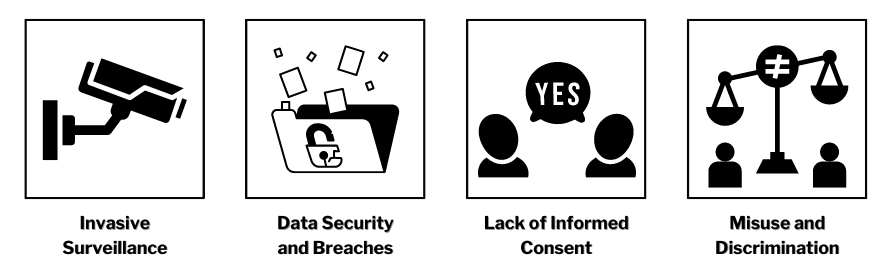
<li><strong>Invasive Surveillance</strong>As this technology becomes more prevalent, questions are raised about the extent of monitoring and tracking individuals' movements in public spaces. Continuous surveillance can undermine privacy. This creates a society where individuals feel constantly observed and their freedom curtailed.</li>

<li><strong>Data Security and Breaches</strong>Facial recognition systems rely on the collection and storage of vast amounts of personal biometric data. The mishandling or unauthorised access to this data can lead to severe privacy breaches, identity theft, and potential misuse.
In 2019, a Chinese facial recognition systems company negligently exposed the biometric data of over 2.5 million users when they failed to secure their database. This caused a massive data breach that resulted in crucial information being fully accessible to anyone on the internet.
<li><strong>Lack of Informed Consent</strong>Facial recognition is often deployed without individuals' explicit consent or knowledge. For instance, surveillance cameras equipped with facial recognition technology may capture and analyse people's faces without their knowledge. This lack of transparency undermines individuals' control over their personal information.</li>

<li><strong>Potential for Misuse and Discrimination</strong>Facial recognition algorithms are not infallible and can exhibit biases. <a href="https://news.mit.edu/2018/study-finds-gender-skin-type-bias-artificial-intelligence-systems-0212">Studies have shown</a> that these systems can be less accurate in identifying individuals with darker skin tones or from different communities. Such biases can perpetuate discrimination and result in unfair targeting.</li>
How To Address Privacy Concerns For Facial Recognition?
There are ways to mitigate the privacy issues of facial recognition. Service providers should take note of practicing transparency when retrieving a user’s biometric data. They should also have strict data protection measures in place to safeguard sensitive information from cyberattacks. At its very core, the algorithmic functions of facial recognition systems can also be improved to more accurately
<li><strong>Ethical Practices and Transparency</strong>Companies and organizations utilising facial recognition technology must adopt ethical practices. This includes being transparent about their data collection and usage policies.
They should provide clear information to users and allow them to make informed decisions about participating in facial recognition systems.
<li><strong>Biometric Data Protection</strong>Strict measures should be implemented to safeguard biometric data. Encryption techniques, secure storage, and data anonymisation can help protect individuals' personal information from unauthorised access and potential misuse.
Giving individuals control over their biometric data — including the ability to opt out of facial recognition systems, is vital in preserving privacy rights.
<li><strong>Improved Algorithmic Accuracy and Fairness</strong>Developers should continuously work towards reducing biases and enhancing the accuracy of facial recognition algorithms.
Diverse datasets, inclusive of various demographics, should be used during the training process to mitigate disparities. Ongoing development efforts should also focus on addressing algorithmic biases to ensure fair outcomes.
Does Facial Recognition Technology Really Affect User Privacy?
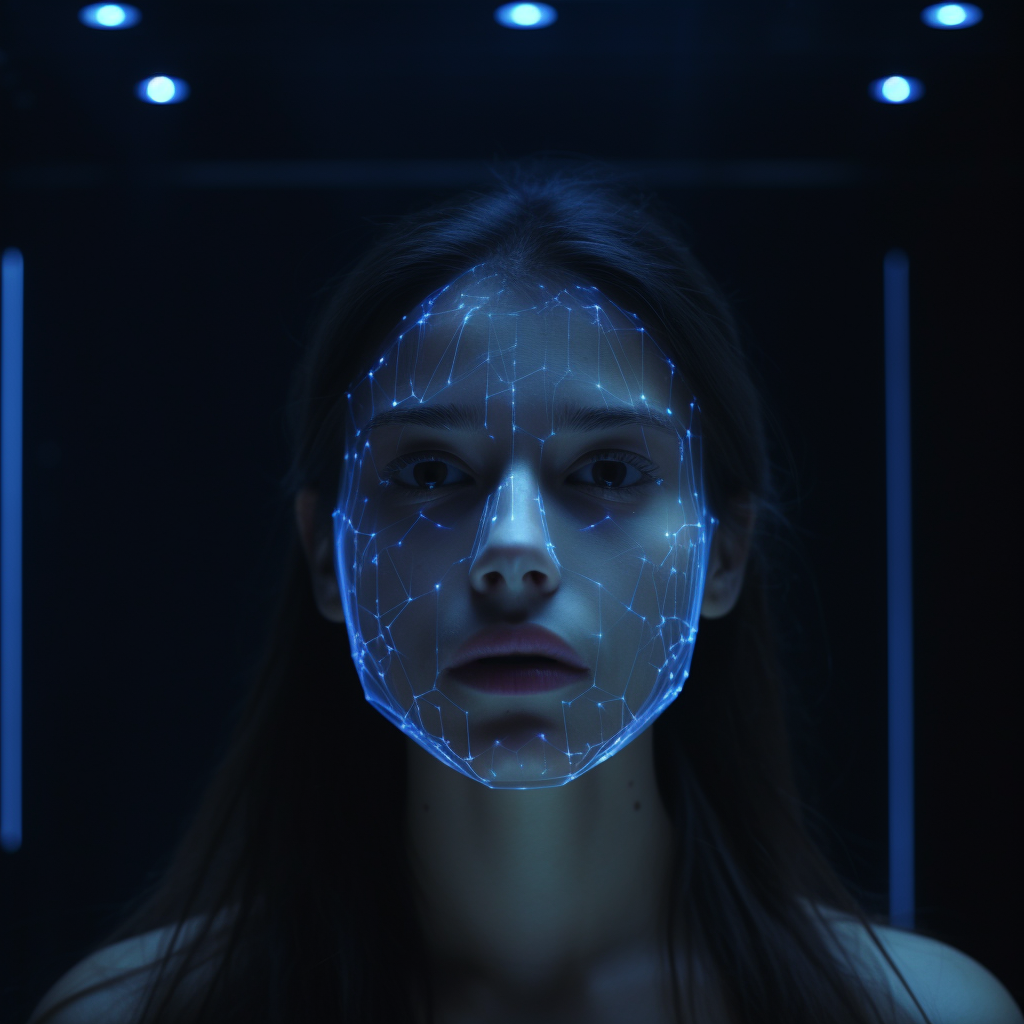
The answer is unequivocally yes.
There are valid concerns regarding privacy in relation to facial recognition technology. Face Recognition has the potential to jeopardise individuals' personally identifiable information, encompassing concerns about surveillance, hacking, and data storage practices.
While the benefits of facial recognition cannot be understated, its function can be a fundamental infringement of user privacy. In order to operate in the way that it is intended, biometric data has to be collected and stored in a database to effectively authenticate users.
Nevertheless, the level of concern regarding privacy hinges on the individual who is utilising the facial recognition system — whether it is a private homeowner, a business, or a government agency. The specific functions performed by the technology and the purpose of its deployment also factor into the equation.
Related articles
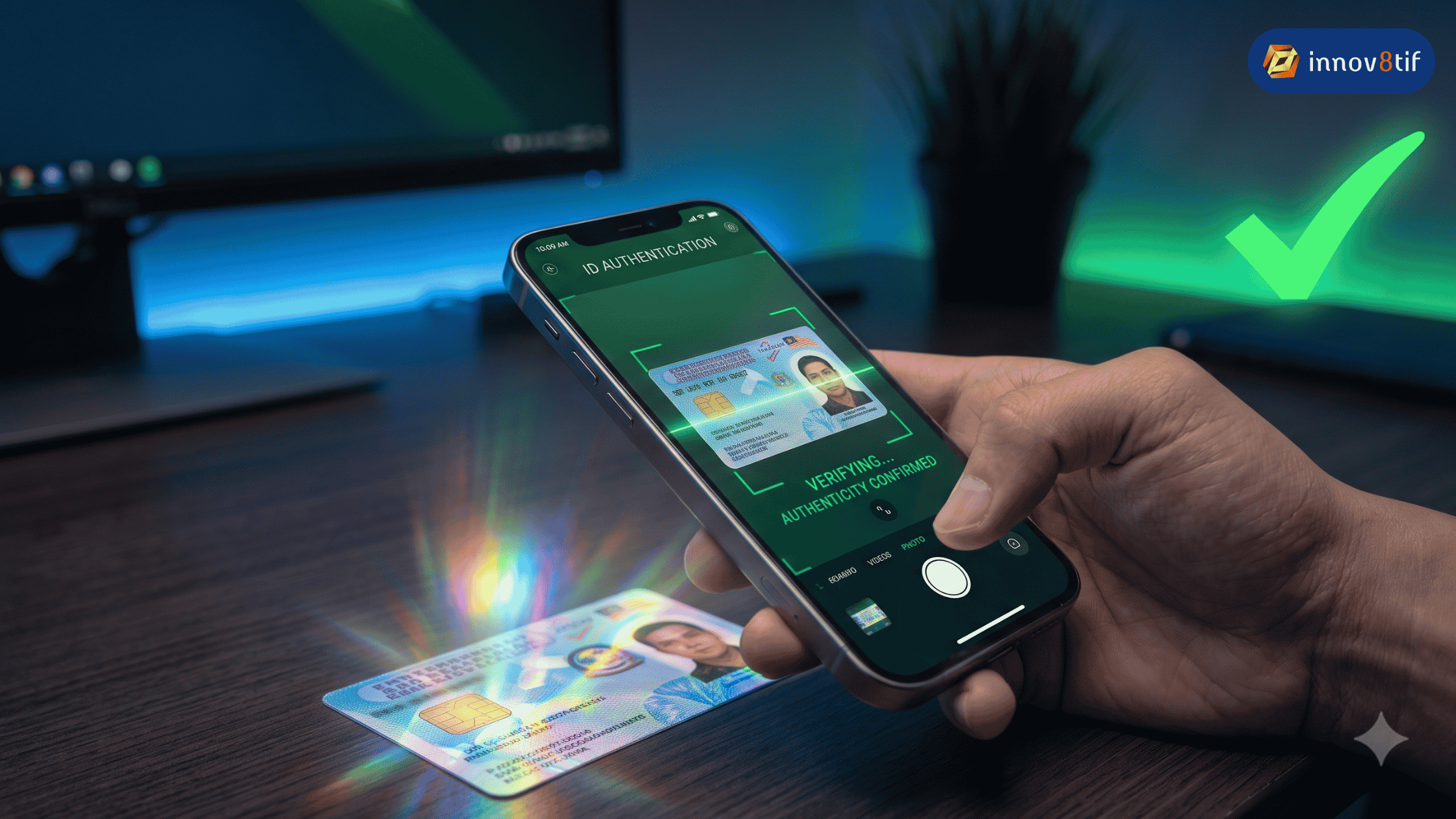
Spotting Fake IDs: How Hologram Tech Keeps Online Sign-Ups Safe
Fraud Prevention Best Practices: Staying Ahead in the Digital Age
Fraud has evolved into one of the most pressing challenges for businesses in the digital age, specifically in industries where trust and identity verification are critical, such as banking, insurance, telecommunications, and e-commerce. Fraudsters are after one thing, and one thing only: your perso
Fraud Prevention in the Digital Age: How AI is Transforming the Fight Against Scams
The onset of the digital age has ushered in remarkable innovations that we never would have thought possible a decade ago. Everything, from the way we work to the way we live our daily lives, has been drastically streamlined by technological advances. However, this progress comes with a double edge