
Types of Liveness Detection Techniques
What Is Liveness Detection?
Liveness detection technology is used to securely distinguish between live human beings and fake biometric samples like masks, photos, or videos. It is a commonly used feature in facial recognition, but can also detect other forms of biometric data. It is also used to prevent biometric spoofing attempts that fraudsters commonly use to bypass remote identity verification processes.
💡 Presentation attacks: A form of cyberfraud that occurs when a fraudster uses someone else's biometric data, known as "spoofs," to impersonate another person.
With this technology, businesses can confidently ensure that the biometric input originates from a live individual and not a spoof attack.
How Does Liveness Detection Work?
Liveness detection is a biometric authentication system that detects spoofing attempts by identifying the characteristics of a live person. These techniques use algorithms and sensors to identify live biometric data such as faces, fingerprints, and voices.
In facial recognition systems, liveness detection algorithms will analyse the presence of facial movement such as blinking and head rotation to differentiate live faces from spoofed ones.
The most commonly used approach involves the use of infrared cameras. When an infrared image captures a person’s face, the tissue of a living organism reflects more light than fake or spoofed tissue.
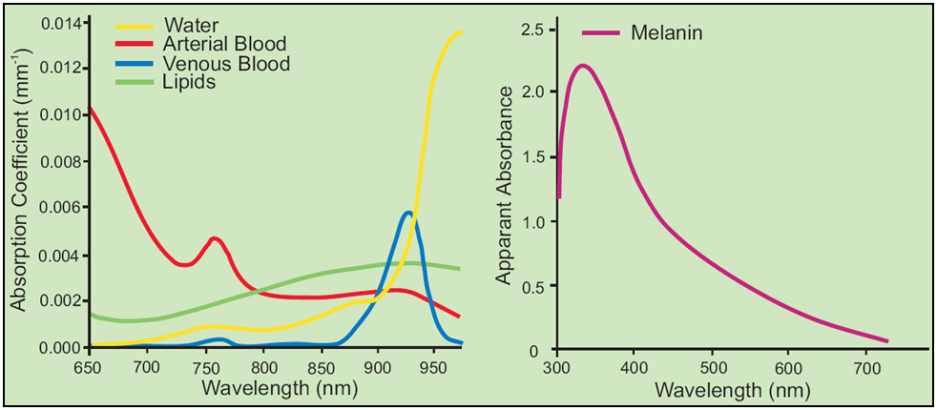 Live users will exhibit these unique biometric variables, which can be used during liveness detection processes. Retrieved from: https://www.intechopen.com/chapters/17746
The detection process is carried out when a user takes a selfie as part of an identity verification procedure. The duration of the detection process may vary depending on whether it’s an active liveness check or a passive liveness check. Passive liveness checks typically take only 1 or 2 seconds, while active liveness checks may require more time.
What Are The Types of Liveness Detection Techniques?
There are two types of liveness detection techniques: active and passive. Active liveness detection requires the user to perform certain actions. On the other hand, passive liveness detection runs in the background and does not require any input from the user.
Passive Liveness Detection
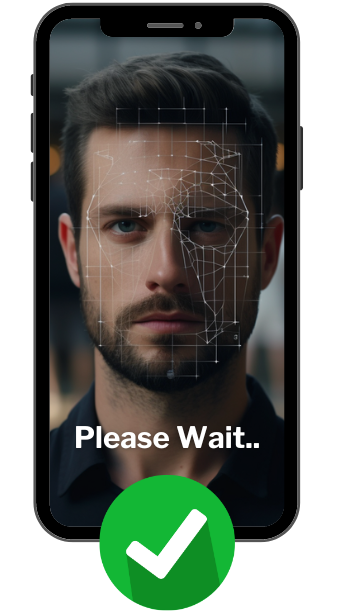
<li>Does not require the user to perform any specific actions</li>

<li>Artificial intelligence is used to analyse a single image of a user</li>

<li>Runs in the background — sometimes without the user’s knowledge.</li>

<li>Quicker and more convenient for users as no action is required from them.</li>

<li>Suitable for services with an emphasis on user experience and convenience.</li>
The scanning process doesn't impose any action requirements on the user. This allows for reduced friction and as a result; lower instances of user abandonment during remote customer onboarding processes.
Various methods are used during passive liveness detection. This authentication process includes evaluating a selfie photograph, recording a video, or even using flashing lights on the person. It uses artificial intelligence models to assess if a biometric template belongs to a live person or not.
Active Liveness Detection

In this liveness detection technique, users must respond to prompts that require motions such as smiling and blinking. This method offers increased reliability and accuracy against spoof attacks as compared to passive liveness detection.
<li>Requires user action to prevent attackers from using photos, videos, masks, or avatars of the users to spoof the system</li>

<li>Typically combines motion analysis and artificial intelligence with multiple sets of images</li>

<li>Usually paired with a <a href="https://www.sciencedirect.com/science/article/pii/S1877050916000417">challenge-response system</a> for additional security against spoofing attempts. Challenge-response systems refer to the prompts (challenge) that users are required to perform and their actions (response).</li>

<li>Suitable for services that place a high priority on data security and protection.</li>
Active detection systems are vulnerable to cybercrime due to their unsophisticated machine-learning models. They are easily deceived by presentation attacks using masks, video manipulation, or synthetic voices.
Bypassing active liveness detection can be done with simple methods, such as wearing a printed image of the target person’s face to mimic blinking and trick the biometric system into verifying the wrong identity.
Which Liveness Detection Technique is Better?
The question of which facial liveness technique is better depends entirely on the needs of the user operating it.
Passive liveness detection is great for the user side. An analysis can be done quickly and without any kind of user input which boasts a seamless speedy process. However, accuracy can be undermined as passive liveness detection analysis typically relies on only a single image.
For the business side — Requiring more actions from the user, and conducting facial analysis in video format may be beneficial for security. This does come at the cost of convenience and speed and will result in reduced customer experience.
However, firms have been observed to shift towards passive liveness detection methods — considering user experience as a priority to attract and retain customers. Nevertheless, it is important to note that the active method shows higher accuracy rates due to its stringent measures.
Is Hybrid Liveness Detection A Better Solution?
Active and passive detection can be combined into a single solution that provides a more robust and accurate liveness verification system. This method seeks to provide high security without affecting user experience.
During hybrid liveness detection, the user is still required to perform actions — but they are as simple as just smiling. There is no need to perform multiple actions and the entire process can be completed almost as quickly as a passive liveness detection system. There is also the perception of a higher level of security when asked to perform simple interactive checks. It is also an effective technique for presentation attack detection since it combines elements from both facial liveness detection techniques.
Bottom Line
Liveness detection systems play an important role in differentiating between live and spoofed input — ensuring the authenticity of biometric data for authentication purposes. The two main types of liveness detection techniques, passive and active, offer distinct advantages.
Ultimately, the choice of liveness detection technique depends on the specific needs and priorities of businesses and users. This is in consideration of factors such as accuracy, security, convenience, and customer experience. This is not a liveness detection competition as some customers may have different preferences and needs, however, the liveness detection AI more or less functions the same way across the different techniques.
Innov8tif offers a robust liveness detection system known as OkayLive . This system makes use of A.I. algorithms to scan and authenticate users’ validity, without sacrificing the convenience of the user experience.
Related articles
Spotting Fake IDs: How Hologram Tech Keeps Online Sign-Ups Safe

Fraud Prevention Best Practices: Staying Ahead in the Digital Age
Fraud has evolved into one of the most pressing challenges for businesses in the digital age, specifically in industries where trust and identity verification are critical, such as banking, insurance, telecommunications, and e-commerce. Fraudsters are after one thing, and one thing only: your perso
Fraud Prevention in the Digital Age: How AI is Transforming the Fight Against Scams
The onset of the digital age has ushered in remarkable innovations that we never would have thought possible a decade ago. Everything, from the way we work to the way we live our daily lives, has been drastically streamlined by technological advances. However, this progress comes with a double edge