
A Practical Guide On Cyber Criminals And How They Operate
Cybercriminals target human or security vulnerabilities in order to gain access to sensitive data or extort money. Though cybercrime should have an easy fix, thwarting it requires complex methods — making it hard for authorities to prosecute. Gude GuiCases of cyber attacks occur every 44 seconds.
With the interest to infect or sabotage, these cyber criminals have become a global threat as they aim to expose individuals and businesses to security and data risks. Discover a practical guide to stop criminals from stealing data is crucial. But, first, let’s have a look at the common types of cyber criminals and the various techniques of how they operate.
1. Hackers

Hackers are usually referred to as an individual with technical expertise to gain unauthorised access to computer networks and systems. They operate for various reasons, such as extortion, espionage or simply just for the thrill of it.
Hacking is typically technical in nature, hence, hackers use exploits such as malicious advertising (maladvertising), where advertisements are disguised to distribute malware. Aside from maladvertising, social engineering tactics are also used to trick users into clicking on an attachment.
The ILOVEYOU virus, a network worm that wreaked havoc in the early 2000's, stands as a prime example of malicious hacking. Started out as an unsuspecting email titled “ILOVEYOU”, clicking the attachment inflicted damage by deleting or overwriting files while sending itself automatically to every email address in your address book. The virus was contained, but the damage had been done. 10% of the internet was infected, leading to mail server shutdowns and $10 billion in losses.
It shows that by taking advantage of the human psyche and security vulnerabilities, hackers are able to bypass security measures and gain access to sensitive information.
2. Phishers
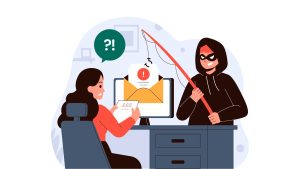
Ever received a text or an email saying you have won a prize from a contest? Being overjoyed, you clicked on the link provided and voluntarily keyed in your personal information, such as name and banking details. Little did you know, you might have given access to a phisher to your data.
Phishers are individuals who attempt to deceive people into providing sensitive information on a false pretense of a trustworthy entity. These scams are done through email, instant messaging apps, or through a link that forwards victims to a fake website that seems similar to the original.
Using tactics such as offering “too good to be true” prizes, or creating a sense of urgency, these phishing scams rely on the victim’s lack of awareness or caution. Once the victim has fallen prey, the information presented by the victim can be used against them. This results in financial losses, or even worse, being falsely accused of fraud.
What makes phishing so frustrating is that most of us know what it is and how it works, but we still get caught out.
3. Insider Threat
Sometimes, not every employee is on good terms with the organisation they work in.
Insider threat, or known as turn cloak, refers to a malicious threat that includes espionage, fraud, intellectual property theft, and sabotage. This usually happens when a disgruntled current or former employee(s) with existing access to the company database tries to harm their organisation.
These employees abuse their power to pilfer data and sabotage systems for their own financial, personal, and nefarious gain. Furthermore, there are cases where said employees are collaborating with a third party, which can be an individual, competitor, nation-state, or an organized criminal network
However, unrecognised insider security threats do occur inadvertently. Unknowingly exposing the enterprise systems to external threats, employees may have been manipulated or ignored security policies. This results in the unintentional aiding of malware spread, phishing and having credentials stolen.
4. Cyber Terrorists
These cyber terrorists use the anonymity of the internet as a weapon to harm, threaten, and destroy innocent individuals, groups, religions, ethnicities, and beliefs.
A recent example of these cyber terrorists is the infamous hacktivists, Anonymous. Back in 2022, Anonymous launch cyber warfare against Russia, following the invasion of Ukraine. The attack resulted in databases being deleted or leaked, denial of services of official websites, and broadcasting channels being “raided”.
Effective Guide To Protect Your Network From Cyber Criminals?
Although there are no failsafe ways to stop these criminals, there are preventive measures or guide to protect your database.
1. Educate and Guide Your Employees
One of the most significant vulnerabilities in any business security is human error.
The number of cyber attacks that happen on a daily basis is due to the failure of recognising a phishing scam or inadvertently downloading malware. Guide and educate your employees on identifying and avoiding potential threats, businesses can significantly reduce the risk of a successful cyber attack.
2. Adopting Automation in Security
Automating your security systems can be an effective guide to reducing threat landscapes and improving overall cyber security. By utilising machine learning and artificial intelligence (AI), security systems can analyse vast amounts of data, detecting and responding to potential threats quickly and effectively.
We have covered security automation in a previous blog article and its benefits for your business.
3. Regular Updates
Hackers leverage the vulnerabilities of your security systems to gain access. By regularly updating your systems and software with the latest security patches, businesses can minimise the risk of cyber attacks that are bound to happen.
4. Use Strong Passwords
Weak passwords are a door for cybercriminals to gain unauthorised access to your database. Businesses should enforce complex password policies with regular changes every few months. On top of that, two-factor authentication (2FA) can be employed to provide an extra layer of security.
By employing EMAS CIDA, Innov8tif has helped businesses in different industries to prevent user errors and protect their database in one customisable solution. Utilising AI in the ecosystem, Innov8tif also provides constant development and support with our team of experts, keeping you away from lurking cybercriminals.
Get in touch with us at sales@innov8tif.com to learn more about the solutions that we can offer.
Related articles

Spotting Fake IDs: How Hologram Tech Keeps Online Sign-Ups Safe
Fraud Prevention Best Practices: Staying Ahead in the Digital Age
Fraud has evolved into one of the most pressing challenges for businesses in the digital age, specifically in industries where trust and identity verification are critical, such as banking, insurance, telecommunications, and e-commerce. Fraudsters are after one thing, and one thing only: your perso

Fraud Prevention in the Digital Age: How AI is Transforming the Fight Against Scams
The onset of the digital age has ushered in remarkable innovations that we never would have thought possible a decade ago. Everything, from the way we work to the way we live our daily lives, has been drastically streamlined by technological advances. However, this progress comes with a double edge