
Job Loss Due To Automation? Don’t Panic Just Yet
Today, job loss due to automation is an increasingly heated topic. Self-driving cars are expected to heavily disrupt the logistics market in the US, an industry that employs about 8 million truck drivers as of 2019, 41.5% of which are from the racial minority.
History has taught us that technological advancements are irreversible — and the global push toward job automation is going to be a mainstay for years to come. However, waves of automation are intrusive, occupying the space low-skilled labour once held and making jobs obsolete. This has lead to cases of widespread job loss and the fear that AI automation will eventually replace all forms of human jobs.
Even skilled labour cannot escape the inevitable grasp of global automation. A Deloitte report predicts that 114,000 jobs within the legal industry are likely to be replaced by artificial intelligence in the next 20 years due to business model changes resulting from LawTech. Even AI solutions such as AIVA and Amper Music are making music composers obsolete for small-scale creative productions.
Despite these case studies causing much concern, will humans eventually be replaced by artificial intelligence moving forward? Or do we still have a chance to prove ourselves as capable workers free from the fear of eventually being out-skilled by new technology?
Too early to tell

Do note that much of the research within this area is not entirely conclusive. Most of the reports published are predictive in nature rather than descriptive, with projections extending to 2030 and beyond.
For instance, a 2017 McKinsey report states that 6 out of 10 current jobs have 30% of their workload technically automatable by 2030. It is likely that 400 million workers will experience job displacement, and 75 million needing to find a new job entirely. The figures have since increased by 25% in their latest 2021 report.
However, a large chunk of global automation was centered at the height of the pandemic in mid-2020. Many automation projects are still underway, with many change management processes taking years to complete. Thus, it is difficult to gauge the actual impact of automation on employment at this point in time.
For instance, the Fourth Industrial Revolution (4IR) trend has driven companies to automate processes since 2016. Yet, global unemployment rates have steadily declined from 5.92% in 2010 to 5.37% in 2019 . It suddenly spiked to 6.47% in 2020, but that can be attributed to the global pandemic instead of a direct result of automation.
Rather than job loss, automation may lead to greater income inequality instead, with a report by Our World In Data confirming that this trend is more prevalent in high-income nations. However, correlation does not imply causation, and the report stresses that technology might only be one out of many explanations for growing income inequality.
While automation has made waves in the labour industry – more research needs to be done to provide a definite conclusion.
A Look Into History

Here is a neat fact — automation is not an entirely new phenomenon. In fact, it has been around since the dawn of human civilisation.
Throughout history, humans have replaced menial tasks with tools or processes. To create fire, wood on wood has transitioned to flint and stones, and eventually modern-day lighters; Trading on the stock exchanges used to be shouting matches, which turned into phone calls and eventually automated robotic trading. It is an inevitability for our species to continue evolving and with or without the use of technology, we will always find ways to make our jobs easier. Yet, despite all these advancements in technology, humans have always found new avenues to put their brains and brawn to good use.
In the 19th century, British weavers and textile workers banded together to oppose the use of mechanised looms and knitting frames. The Napoleonic Wars made textile production cheap, and artisans were being pushed out of their jobs. The group called themselves Luddites, and began breaking into factories and smashing textile machines. Some readers may find resembling news stories in recent years.
Looking deeper into history, readers may learn that periods of high unemployment rates have little to do with leaps in technological advancements.
With an unemployment rate as high as 25% according to labor statistics, the Great Depression in the 1930s was caused by the collapse of stock market prices, a banking crisis, and a whole host of other economical factors. In China, unemployment rates peaked at about 40% in 2009 due to the economic fallout of the 2008 Global Financial Crisis, affecting large swatches of rural migrant laborers who moved towards the cities for employment.
Periods of high unemployment rates are not uncommon throughout history, many of which are easily identified by their titles “The Panic of…” followed by the corresponding years, which range from 1837 all the way to the early 1990s. High unemployment rates are usually the result of the following factors:
<li>Economic Crisis</li>

<li>Infrastructure investments</li>

<li>Tax Policies</li>

<li>Healthcare costs</li>

<li>Employment policies</li>

<li>Educational policies</li>

<li>Regulatory reforms</li>

<li>Trade Policies</li>

<li>and many more</li>
What Makes Robots Preferable To Humans?
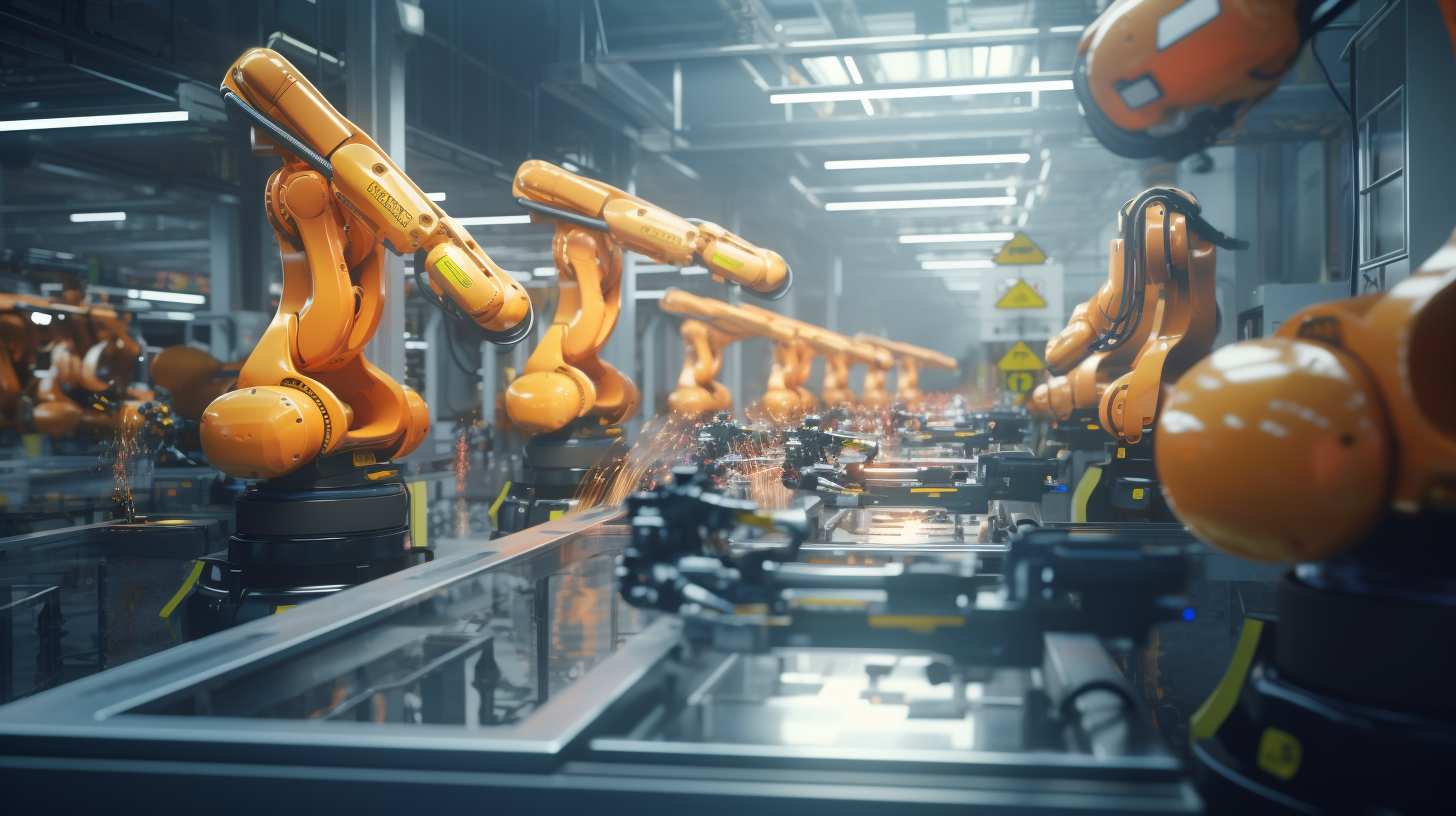
Robots are often perceived as more efficient and able to perform tasks that humans could never do in their own capacity. To better understand the relationship between automation and job loss, here are the factors driving automation adoption within industries:
<li><strong>Upkeep costs</strong></li>
Although expensive upfront, automation technology may save companies millions of dollars in the long run due to funds that would otherwise be channeled toward employee benefits, salaries, and taxes. Automated solutions only require a few technicians to maintain and upkeep, requiring occasional firmware and hardware upgrades every few years.
<li><strong>Safety & health risks</strong></li>
Having employees work in the office has become a liability risk in the age of the pandemic. Transmission of diseases between multiple individuals within the same confines can be rapid and often unseen. Fortunately, robots do not sneeze, drool, or cough — making it a safer alternative.
<li><strong>Consistency & efficiency</strong></li>
Unlike human workers, automated solutions can operate 24/7 without breaking a sweat. As long as its core instructions are well defined, the work produced by automated solutions is consistent and leads to increased productivity. Contrast this with humans who are prone to stress, fatigue, and unpredictable interpersonal relations. A machine will simply do the job it is programmed to do without the complexities of human weaknesses to hold it back.
Why Aren’t All Jobs Automated Yet?
The labor market still heavily relies on human workers to perform specific roles in industries such as manufacturing and customer service. This is due to the fact that a certain occupation may still require that human ‘touch’ that AI technology cannot replace. Business owners will soon realise that, despite all of its benefits, automated solutions do come with their own limitations and risk.

<li><strong>Agility</strong></li>
Investing in automated solutions can be costly in terms of time and resources. While setting up a new solution, there might be newer workflows or product offerings that are superior to the ones already implemented. Human workers, on the other hand, are better at adapting to the forever-changing working environment and industry changes.
<li><strong>Creativity & analytical skills</strong></li>
Data solutions and machine learning algorithms can be programmed to run automatically, but businesses still require subject matter experts to consolidate these findings to convey meaningful, subjective insights. Automated tools, both digital and mechanical, can assist in strategy planning and execution, but it cannot replace the core creative skill that humans have.
<li><strong>Cybersecurity and business continuity risks</strong></li>
Automated solutions generally rely on IT infrastructure and network connectivity, meaning more time and effort needed to be spent on ensuring its security and stability. Ransomware cases are on the rise, and companies are increasingly vulnerable to these attacks. While employees have their own unique risks, compromised automated solutions have an immediate impact on a larger scale across the corporation.
<li><strong>Data privacy issues</strong></li>
Many enterprise-grade automated solutions rely on third-party vendors and API providers to get the solutions up and running. A whole host of sensitive corporate data are potentially being stored and channeled through infrastructure that is largely outside of the company’s control. Unless data and processing capabilities are done entirely on-premise, there is a risk of sensitive data being leaked out or copied for nefarious use cases.
The Innov8tif Approach
While automation can make certain jobs obsolete, there will be an endless list of high-value tasks that will always require human intervention. The most significant transitional pains are the efforts needed to reskill and upskill existing talents to fit their new roles.
While old jobs are increasingly driven towards obscurity, new jobs are mushrooming across various sectors, most of them are digitally-oriented. Employees are required to learn new skills on the fly and be more comfortable with adapting to new technological solutions in a changing environment.
With 11 years of history at Innov8tif, we are no strangers to new workflows, especially when handling cutting-edge technology within the ID Verification realm. To help employees adapt to the switch we have adopted several key values:
<li><strong>Flexibility</strong></li>
Beyond several core functionalities, each Innov8tif department is free to utilise whichever tools are needed to get the job done. By offering much-needed flexibility, each department is able to evaluate its current resources, weakness, and strengths, and work around automated solutions to maximise efficiency and work satisfaction. Innov8tif employees are granted more freedom and power to make their own choice than a machine ever will.
<li><strong>Documentation</strong></li>
We are a fast-growing company, and it is important that new recruits are brought up to speed. At Innov8tif, we cultivate a corporate culture of documentation, such as establishing SOPs and guidelines, so that the work being delivered is consistent and replicable. This also sets a precedent for projects in the future as all this documentation will contribute towards a single source of truth.
<li><strong>Stewardship & Accountability</strong></li>
Great innovation needs to be backed by strong foundations and accountability. There are clear lines that could not be crossed, especially when it comes to data privacy and security-related matters. While we encourage tackling challenges in unconventional ways, Innov8tif takes great lengths in educating staff members on not just technical skills, but fundamental values that are transferable across workflows, such as data management and cybersecurity awareness.
We are hiring humans, not robots! Join us by visiting our career page to learn more about our available job openings, or e-mail us at career@innov8tif.com !
Related articles

Spotting Fake IDs: How Hologram Tech Keeps Online Sign-Ups Safe

Fraud Prevention Best Practices: Staying Ahead in the Digital Age
Fraud has evolved into one of the most pressing challenges for businesses in the digital age, specifically in industries where trust and identity verification are critical, such as banking, insurance, telecommunications, and e-commerce. Fraudsters are after one thing, and one thing only: your perso

Fraud Prevention in the Digital Age: How AI is Transforming the Fight Against Scams
The onset of the digital age has ushered in remarkable innovations that we never would have thought possible a decade ago. Everything, from the way we work to the way we live our daily lives, has been drastically streamlined by technological advances. However, this progress comes with a double edge