
Is Facial Recognition Effective Against Identity Theft?
Identity theft is a dangerously common form of fraud that costs businesses money, reputation, and customers every year. Criminals will use stolen identities to access sensitive company information, make fraudulent purchases, or engage in other illegal activities that can harm the business and its customers.
One of the best methods to counter identity theft attacks is through biometric authentication systems such as facial recognition. Companies are actively turning towards facial recognition software because it is one of the more secure and reliable options for biometric authentication.
The rise of digital services means that identity theft is becoming more rampant as many digital services typically require users to submit their identity as part of the sign-up process.
Therefore, it is imperative that companies employ facial detection software to prevent fraudsters from stealing personal information that these companies have been entrusted with.
What Is Facial Recognition?
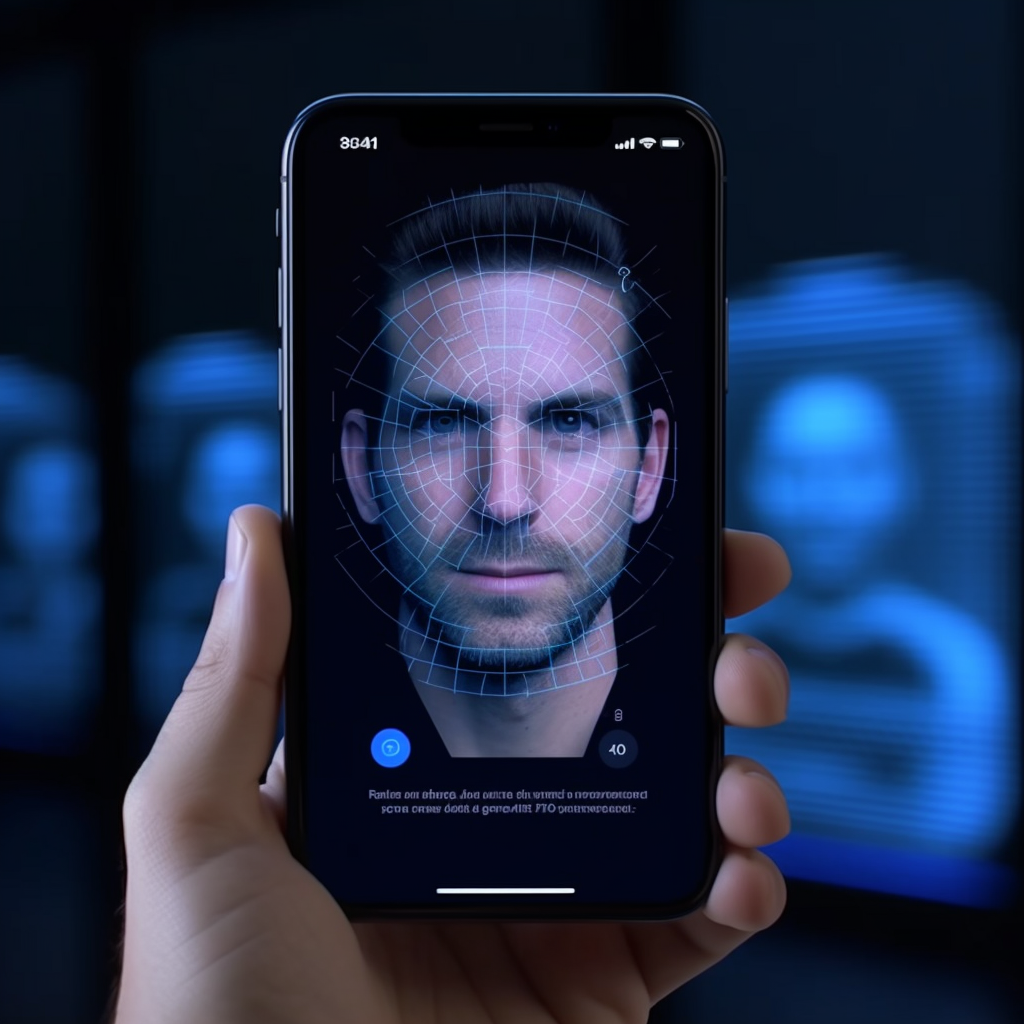
Facial recognition uses algorithms and machine learning techniques to identify and verify human faces within digital images or video.
If you are a smartphone user, then you are likely familiar with face recognition software. It is the Face ID system that scans your face to allow access to your phone.
Facial recognition is already widely used in many institutions.
<li>Facebook uses facial identification to suggest who to tag in uploaded photos, and law enforcement agencies heavily rely on facial detection software to identify potential suspects.</li>

<li>In a cybersecurity context, many BFSI companies use facial recognition to capture an image profile of a user during their first-time account sign-up.</li>
How Does Face Recognition Software Help To Prevent Identity Theft?
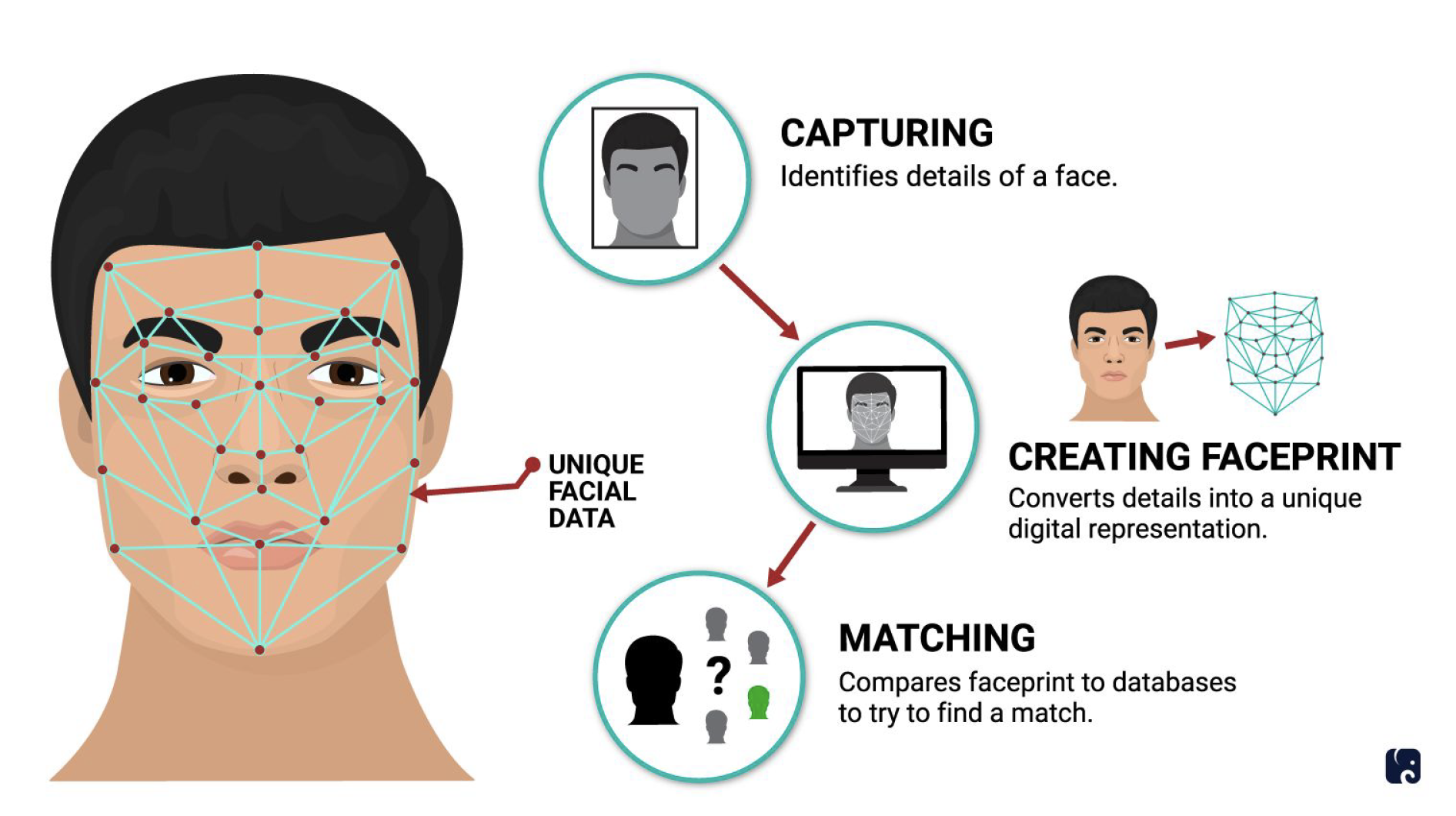 Image retrieved from: https://stoplapdspying.org/facial-recognition-factsheet/
Face detection works by analysing visual patterns to detect and extract facial features such as the eyes, nose, and mouth. It then converts the subject’s unique characteristics into data, including angles, sizes, and feature distances. This data is used to create a distinct digital profile that can be referenced later on.
In the future, when the user needs to authenticate themselves, they can scan their face with the camera on their smartphone or laptop. The facial ID software will then compare the newly captured image to the original profile stored in the database to determine whether or not the person is the same. If any significant differences are detected, the software immediately flags the attempt as fraudulent and blocks access.
Possible Vulnerabilities of Facial Recognition Software
Although facial recognition is an effective way to counter identity theft, it also has its vulnerabilities; namely in the form of detection inaccuracies, demographic bias, and fabricated identities.
When Apple introduced Face ID to unlock the iPhone X in 2017, users quickly found loopholes in the system. They discovered that a close relative's face could be used to unlock the phone. A Vietnamese security firm also managed to successfully trick Apple's Face ID system with a 3D-printed mask.
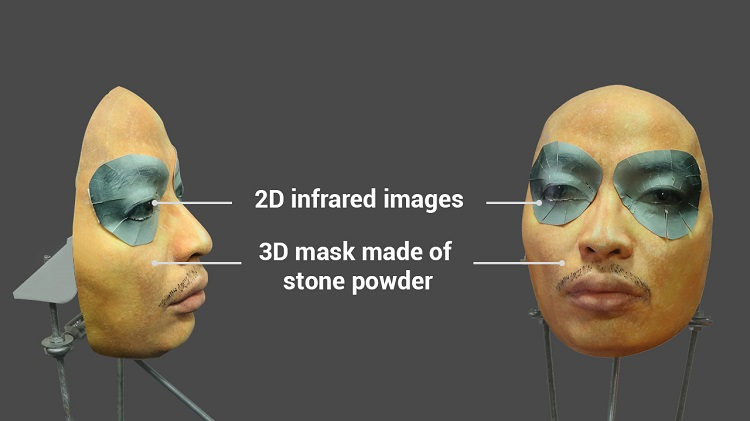
Image retrieved from BKAV
This case has raised questions about the vulnerability of traditional face detection software. Some drawbacks worth mentioning are:
<li><strong>Detection Inaccuracies</strong>: As with any other automated process, facial detection systems may generate false positives or false negatives, which can result in identification errors. According to a <a href="https://www.nist.gov/news-events/news/2019/12/nist-study-evaluates-effects-race-age-sex-face-recognition-software">2019 report</a> by the National Institute of Standards and Technology, the rate of false results can vary significantly depending on factors such as image quality, the available dataset, and the ethnicities of the faces being scanned.</li>

<li><strong>Demographic Bias</strong>: Facial detection software may exhibit bias towards certain demographics or skin tones, resulting in false negatives or false positives. This error is caused by the software's learning algorithm being trained on inadequate data. For example — if the training data consists of a thousand samples of white males but only a few samples of Asian females, the algorithm will struggle to accurately identify the faces of Asian females.</li>

<li><strong>Fabricated Identities</strong>: Manipulated images in the form of fabricated faces can deceive face detection software. As noted earlier, hackers have managed to bypass Apple's Face ID system by using 3D-printed masks that possess all the required characteristics to trick the software into recognising them as actual human faces.</li>
How To Reduce Vulnerabilities By Combining Face Recognition Software With Other Anti-Identity Theft Measures?
The goal is to introduce multi-factor authentication, which combines face recognition software with other authentication methods. This enables businesses to authenticate users faster, cheaper, and more securely.
The following authentication methods include:
<li><strong>Liveness detection</strong>: Verifies that the person being presented to the system is actually a living person and not a fake or spoofed representation.</li>

<li><strong>Device Binding</strong>: Device binding ties an electronic device to a specific user account or digital service.</li>

<li><strong>Blacklisting</strong>: Identifies and rejects individuals from accessing a certain location, service, or device based on their biometric profile.</li>
The Future of Face Recognition in Identity Theft Prevention
Facial detection software has a lot of potential for improvement, especially with the increasing development of artificial intelligence. With the help of AI, the machine learning algorithms in the system can more efficiently train samples and become more intelligent in detecting and preventing identity spoofing attempts.
We can expect to see facial detection software being adopted as the norm in many more business processes. Currently, this system stands as one of the quickest and most robust methods for preventing identity fraud.
Advancements in technology will continue to improve processing times and accuracy, keeping pace with evolving identity theft techniques. As a result, we can be confident in the ability of facial detection software to protect against identity theft in the years to come.
Related articles

Spotting Fake IDs: How Hologram Tech Keeps Online Sign-Ups Safe

Fraud Prevention Best Practices: Staying Ahead in the Digital Age
Fraud has evolved into one of the most pressing challenges for businesses in the digital age, specifically in industries where trust and identity verification are critical, such as banking, insurance, telecommunications, and e-commerce. Fraudsters are after one thing, and one thing only: your perso

Fraud Prevention in the Digital Age: How AI is Transforming the Fight Against Scams
The onset of the digital age has ushered in remarkable innovations that we never would have thought possible a decade ago. Everything, from the way we work to the way we live our daily lives, has been drastically streamlined by technological advances. However, this progress comes with a double edge