
Holiday Scams During the Christmas Season
Scammers have been increasingly active in recent years, but the holiday season is where they take their activities to a whole new level.
A recent report found that cases have consistently increased by 15% in November and December over the past five years. The elderly are the ones at most risk too, with 92,000 victims over 60 reporting US$1.7 billion in losses in 2021 — a 74% increase compared to 2020.

The season of giving becomes the season of taking. “Cybercrime has gotten more sinister and significant,” said Mike Steinbach, the head of Citibank’s fraud prevention unit. “The public needs to know fraud has evolved. You shouldn’t be waiting on monthly or quarterly reports and check your accounts regularly.”
To protect yourself against these threats, it is best to gain a better understanding of the various types of attacks and learn what to look out for.
Types of Holiday Scams

Shipping scams
As more individuals shop online and have products delivered to their homes, scammers have more opportunities to pose as new online merchants or well-known delivery firms.
According to Check Point, shipping scams accounted for one out of every six malicious emails sent in the first ten days of this month. These emails often convey a sense of urgency in order to persuade the recipient to click on a link without due caution; for instance, by stating that there is an issue with their delivery that requires immediate attention. If the link is clicked, the user may either download malware into their computer or be directed to a website that attempts to trick them into giving away sensitive personal data.
Shopping scams
Norton researcher Kevin Roundy claims that a little over one in three adults admit to taking more risks in the holiday season— Thus more likely to purchase big-ticket items.
Here is an illustration of the holiday scams you might run into this year. Check Point Research discovered that approximately 15,000 fake websites were made to advertise cheap designer handbags in just the second week of November. Such websites might also attempt to sell you expensive Louis Vuitton, Dior, and Balenciaga knockoffs and steal sensitive personal information like credit card details.
Charity scams
According to AARP, you are more likely to encounter a charity-related fraud scam during the holiday season than any other. Nearly 40% of those polled admitted to hearing a fake charity proposal.
One method used by con artists is to write you an email thanking you for your previous donations and requesting more financial assistance. The email's link will direct you to the con artist's fake website rather than the charity's, where it may attempt to steal money and sensitive personal information.
Quick tips to protect yourself
Recognize that you are at risk
Scams can happen to other people, your friends, or distant family members — but not you…right? The first step is to understand that no one is immune to scams and fraud attempts. Chances are, our personal, sensitive information is already stored on a scammer’s server somewhere, and keeping that possibility in mind.
Be aware of who you are dealing with
Unfamiliar email addresses, phone numbers, and contacts should be viewed cautiously. A red flag would be If they are offering a service that sounds too good to be true, or they are creating a strong sense of fear and urgency. Quick investigations, such as reviewing the address bar, email signature or doing a quick google search on the company’s background can go a long way.
Beware of unfamiliar payment types
Scammers generally want to be paid in ways that cannot be reversed or traced. The moment they receive the funds, they can bolt and be scot free. Payments in the form of gift cards, cryptocurrency, and wire transfers fall under this category.
Hence, any unconventional payment method should be viewed cautiously. Credit card transactions are still the preferred default payment method, because transactions can be easily canceled and refunded. Reward points system for holiday purchases is also a huge plus, but good financial literacy is still a must.
Configure your accounts properly
Password management should not be a memory test, but a comprehensive account risk management strategy. It is only a matter of time before being compromised, and having good password management limits the damage it can cause.
Change the passwords you use for your credit card, online banking, and other financial accounts every three months. Use strong combinations of letters and numbers, or "passphrases," illogical combinations of words, numbers, and symbols. Never maintain a physical list of passwords, and we recommend using well-trusted password managers with proper breach notification policies.
What To Do After You’ve Realising You’re Scammed

The first response to being scammed is usually panic, but it is important to remember that the work is not over and there are still tasks to be done.
<li><b> Remove access</b></li>
Restricting access should be the first step once the fraudsters manage to gain access to your online account or your credit card information. Examples include changing passwords or notifying the bank to freeze accounts or canceling credit cards. Be aware of other accounts that may have the same credentials as well.
<li><b> Documentation</b></li>
Having copies of interactions with the scammer, be it documents, links, malicious apps, are crucial in helping authorities perform their roles. Having timestamps and creating a timeline will also help bank staff members better trace transactions and form a better idea of your situation.
<li><b> Report & Recovery</b></li>
If the response is quick, there is a chance to recover funds before the fraudsters can manage to get a hold of more. LIke most financial cases, however, most funds tend to be gone forever. However, it is still important to go on record and report the situation to police and bank authorities. Chances are, fraudsters may have enough personal information to create additional false identities, and having these records is a means of personal legal protection.
Getting scammed is the worst way to spend a festive, merry holiday season. However, basic awareness and alertness can rescue the likelihood of us falling victims.
Innov8tif wishes everyone a happy holiday season, and subscribe to our newsletter for more quick fraud insights.
Related articles
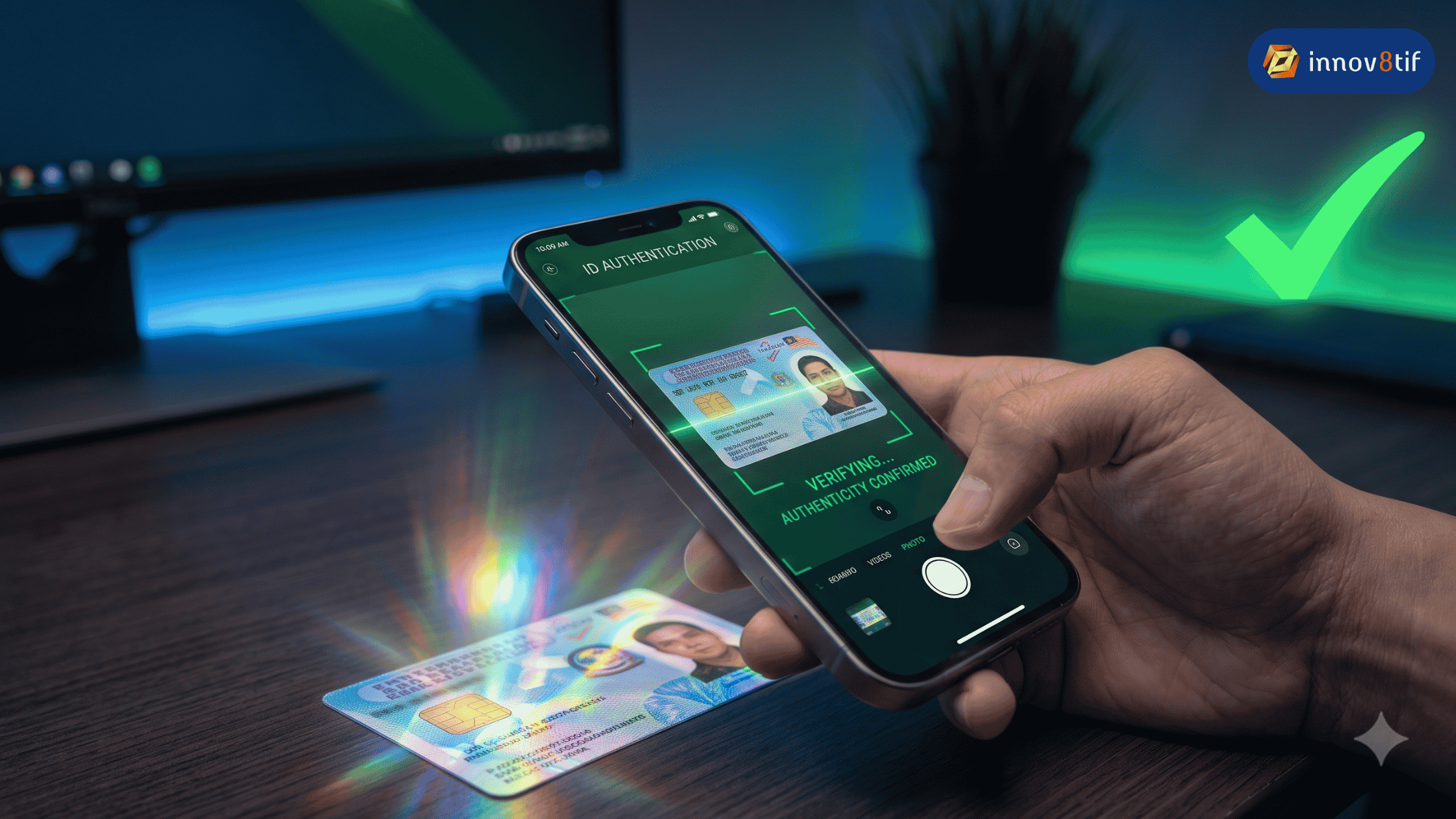
Spotting Fake IDs: How Hologram Tech Keeps Online Sign-Ups Safe

Fraud Prevention Best Practices: Staying Ahead in the Digital Age
Fraud has evolved into one of the most pressing challenges for businesses in the digital age, specifically in industries where trust and identity verification are critical, such as banking, insurance, telecommunications, and e-commerce. Fraudsters are after one thing, and one thing only: your perso

Fraud Prevention in the Digital Age: How AI is Transforming the Fight Against Scams
The onset of the digital age has ushered in remarkable innovations that we never would have thought possible a decade ago. Everything, from the way we work to the way we live our daily lives, has been drastically streamlined by technological advances. However, this progress comes with a double edge