
e-KYC Solutions for Banking may become Crucial Necessities. Here's why
The capability of businesses to onboard their customers through digital methods, easily, efficiently, and safely, is a critical component of fintech. The technology that has evolved to allow this is called e-KYC (electronic know-your-customer).

KYC is an old banking term that refers to knowing a customer's identity, financial activities, and potential risks, especially in areas like money laundering. e-KYC has become the standard in countries like China, thanks to the widespread use of mobile devices with high-quality cameras and scanners, as well as innovations like document authentication, facial recognition, and biometrics. In reality, a few technologically advanced banks in Thailand, the Philippines, and Indonesia have persuaded regulators in those countries to enable them to onboard new customers entirely digitally on a case-by-case basis.
Checkpoints in a bank require the gathering of legal documentation and records to verify a customer's identity. If the customer is deemed a "high risk," the bank will request additional information to establish a risk profiling assessment. Manual processes are time-consuming, prone to mistakes, and present specific challenges.
1. Instantaneous
The e-KYC service is fully automated and available online. This means that KYC data can be transferred in real-time without any manual intervention. The paper-based KYC process can take days or weeks to complete, while the e-KYC process only takes a few minutes to complete. Besides that, e-KYC technology can also provide 24/7 business support.
2. Reduced failed client acquisition and acquiring new customers
Today's banks are under pressure to raise their acquisition rates, and the digital onboarding process is critical to attracting new customers and maintaining customer engagement. According to The Digital Banking Report (2017), 43% of those who are dissatisfied with the process of opening a new account say they will be able to switch banks because they have to enter information more than once, particularly when moving from one channel to another, it is not near real-time, and the accuracy is poor.
As a result, e-KYC is one of the best solutions for overcoming the limitations mentioned above. It makes a bank's customer onboarding a one-of-a-kind experience, regardless of how many platforms they use or when they use them. Guaranteed information is modified and synchronized through networks to give consumers peace of mind that the data they have access to is still up to date.
3. Digital onboarding reduces fraud
The truth is that banks have always had to deal with revenue loss as a result of fraudulent activities. They are currently confronted with enormous challenges in effectively combating systemic digital fraud, especially when working with the remnants of old legacy systems. Digital onboarding process has arisen to take advantage of the mechanism as banking transactions have moved to more digital and mobile platforms. As technology progresses, banks will have access to more tools to help them combat fraud, such as e-KYC in the automated onboarding phase for banks.
Rather than just authenticating users when they log into an account, systems now actively track accounts to ensure that they are not behaving abnormally. A scoring system that "checks how certain it is that the account owner is also the one using the computer" is one way to think about how continuous authentication could work. OCR, facial recognition, liveness detection, and fraud detection are examples of these technologies. This method aids banks in increasing device security and reducing fraud during the digital onboarding phase.
4. Improve customer experience
In the banking industry, onboarding is the most direct way to show customers what kind of customer service they should expect from your bank. According to the Signicat study (2019), 40% of customers abandon banking onboarding procedures due to the time it takes to complete the necessary steps or the need to include too many personal details. Personalized user experience is the key to maintain customer's attention when it comes to digital banking. Reason being; customers these days want personalized and real-time interactions, simplified banking access to their accounts.
5.The technology that led to e-KYC
<li>Facial recognition technology</li>
Face recognition is detecting, identifying, and verifying a person’s face that involves the measurement of a human’s physiological characteristics. It is a task that is trivially performed by humans, even under varying light and when faces are changed by age or obstructed with accessories and facial hair. Nevertheless, it remained a challenging computer vision problem for decades until recently.
Then comes the Artificial Intelligence advancement that attributes facial recognition technology to deep learning technology. The maturity in deep learning is the main driving force behind the maturity of e-KYC feasibility today. Not only that, facial recognition, anti-spoofing of biometric liveness, behavioural pattern recognition are all part and parcel of outcome from deep learning advancement.
Another watershed moment occurred in 2010 when Facebook, for the first time, used facial recognition to detect people with featured faces in images uploaded by Facebook users. It is now evolving in unimaginable ways. All of the elements that would turn KYC were in place, and eKYC slowly began to emerge. e-KYC, like most emerging technology, aims to simplify a complicated process by incorporating digital innovation into KYC's legacy process.
<li>Smartphones with cameras</li>
We can identify the exact moments that changed the game by looking at how other businesses developed their technologies. The use of cameras on mobile devices was one example. A large part of the issue is solved by the camera, which, among other features in smartphones, allows you to face-to-face with the customer.
In May of 1999, Japan launched the first smartphone with a sensor. The Kyocera VP-210 was the first phone with a built-in camera that was marketed to the general public commercially. In 2002, Nokia 7650 and Sanyo SPC-5300 were released not long after. That's when organizations started looking into the digitization of specific processes in a variety of industries.
Related articles
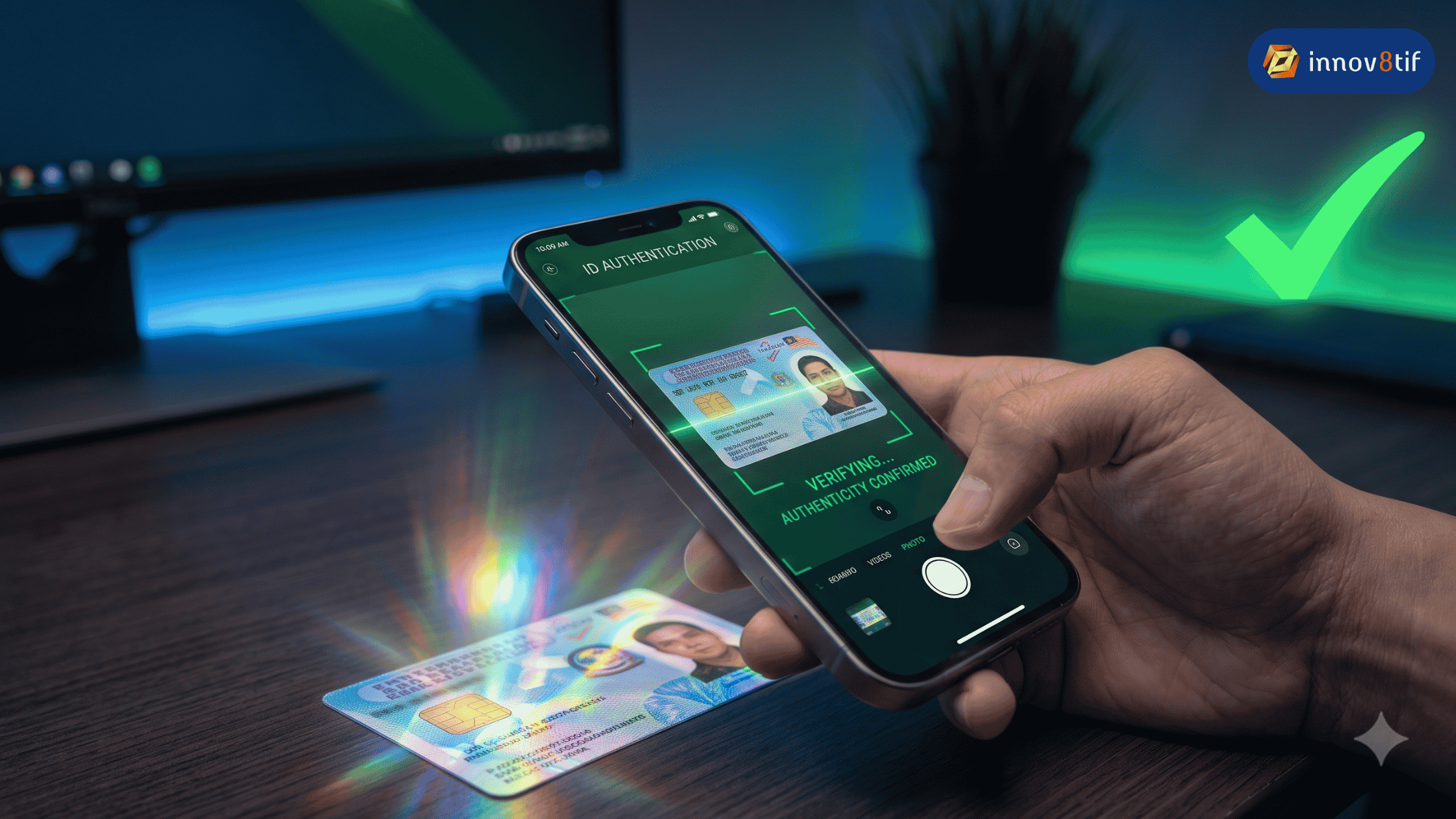
Spotting Fake IDs: How Hologram Tech Keeps Online Sign-Ups Safe

Fraud Prevention Best Practices: Staying Ahead in the Digital Age
Fraud has evolved into one of the most pressing challenges for businesses in the digital age, specifically in industries where trust and identity verification are critical, such as banking, insurance, telecommunications, and e-commerce. Fraudsters are after one thing, and one thing only: your perso

Fraud Prevention in the Digital Age: How AI is Transforming the Fight Against Scams
The onset of the digital age has ushered in remarkable innovations that we never would have thought possible a decade ago. Everything, from the way we work to the way we live our daily lives, has been drastically streamlined by technological advances. However, this progress comes with a double edge