
What are the Differences between Digital Banking and Virtual Banking?
Digital disruption has impacted the world’s financial landscape, as well as other facets of society. Digital automation may become even more common in the years to come.
In the midst of a ferocious pandemic, economic and health-related pressures have stirred innovation towards the reinforcement of banking processes for both individuals and businesses.
Fintech can be found at the center of this trend, and major financial institutions are beginning to make way for smaller, more uniquely positioned, and more agile fintech solution providers.
Partnerships, pivots and added offerings have unraveled concepts that push convenience, speed and digital integration to the forefront. Among these concepts are digital banking and virtual banking. They may seem similar, however, these two concepts have major differences.
Virtual banks are fully online

The key difference to remember between digital and virtual banks is that virtual banks are made up of financial services and processes that exist solely online. By its definition, virtual banks don't rely on branch offices or any other forms of physical presence to resume operations. For the most part, interested applicants need to download a mobile banking app if they want to open a bank account under a virtual banking service. You'll need to submit your details and complete various security checks through an online platform before being assigned a fully virtual account. These online platforms are usually verified and offer protective measures to keep customer safety a top priority.
It isn't difficult to see that virtual banking stemmed from a booming demand of convenience and rapid speed, amid rising digital infrastructures as consumers grow more dependent on online transactions and ecommerce. The concept itself is relatively new - compared to some other financial innovations - eradicating the need for many burdens carried by traditional banks. There are no physical outlets, so expenses like rent, maintenance and workforce for individual branches are non-existent. Every process, inquiry, transaction and application is conducted via an online system, which translates to freedom and efficiency.
Digital banking may comprise physical aspects
Also known commonly as internet banking or online banking, digital banking is more of a blanket term that describes the added digital components to conventional banking processes. In this regard, digital banking has been around for quite some time now, with earlier forms involving logging into bank websites to check active accounts or complete transactions. The term itself can be seen as a predecessor which led to the eventual rise of virtual banking in its current form. For the most part, digital banking might require users to first head over to conventional bank branches and register physically.

Some paperwork may be involved, and customers might have to complete their registration over the counter before they can access their online accounts. Of course, things have changed quite dramatically these days, and many traditional banks offer the option of creating online accounts from the comfort of your home. However, it's still necessary to create an active account with that bank - and that still requires you to head over to physical branches.
In mid-Jul 2020, CIMB Malaysia introduced an online-to-branch account opening process for individual banking customers, who can now submit their application to open a current or savings account online. Subsequently, they proceed to a dedicated e-account opening priority queue available in all the bank's branches to complete the application via Know-Your-Customer due diligence.
Nowadays, digital banking is used more as a term to describe any banking activities which are conducted and completed through digital devices. Consumers are constantly using their phones to access saving apps or pay for products by scanning codes, while companies are used to paying salaries and expenses through banking apps online. By definition, these are all examples of digital banking.
They are built on different foundations
It's true that people often use these two definitions as synonyms for each other, but the truth is that a difference lies in the precise description for each one. Virtual banking is a more narrowly defined term, in fact, it focuses on the foundation of digitizing core aspects of banking. This means that virtual banking is one step ahead in terms of innovation, seeing that accounts can be opened and created or deactivated completely online. There is no need for physical paperwork, over-the-counter interactions or additional on-ground processes. Even the bank card is delivered to the customer's doorstep upon account creation. This is pretty new for many people around the world. In some instances, a physical bank card doesn’t even exist; it could be a fully digital bank card.
Digital banking is more familiar, encompassing digitally-empowered programs and activities undertaken by standard financial institutions for their customers. As of now, the process of creating an account physically before enjoying all the digital conveniences is still a norm for many.
Differences with regard to versatility
Another key difference is in the intrinsic versatility of virtual banks compared to financial institutions that offer digital banking services. This may be due to digital strategy as a core part of how these entities do business.
For one, major banks often rely on cookie-cutter strategies and monolithic business models which are typically limited in the full range of capabilities for online servicing. Banks are striving to fight back with a more diversified plethora of strategies and offerings tailored to meet personalised customer segments.
On the other hand, virtual banks are not bogged down by many of the outdated financial structures often carried by big and established banks. They utilize technology stacks and focus on building new benchmarks in the realm of customer experience. What's more, they capitalize on their ability to run fully-digital operations and design offerings based on a digital-era business model that's positioned for future innovation. They complement core features with third-part products for added value such as cross-border payments, lending and investing additions, all while still controlling end-customer experience. They are more inclined towards the agile fintech business structure, which means that they have more disruptive power.
Curbing the versatility constraint from conventional banking infrastructure, some incumbent retail banks are also branching out a totally new brand for digital banking services and products, tapping into the needs of a very specific customer segment. For example, TMRW by UOB is a mobile-only digital bank designed for the ASEAN millennial, the digital service strategy is built through a bottom-up approach.
Related articles
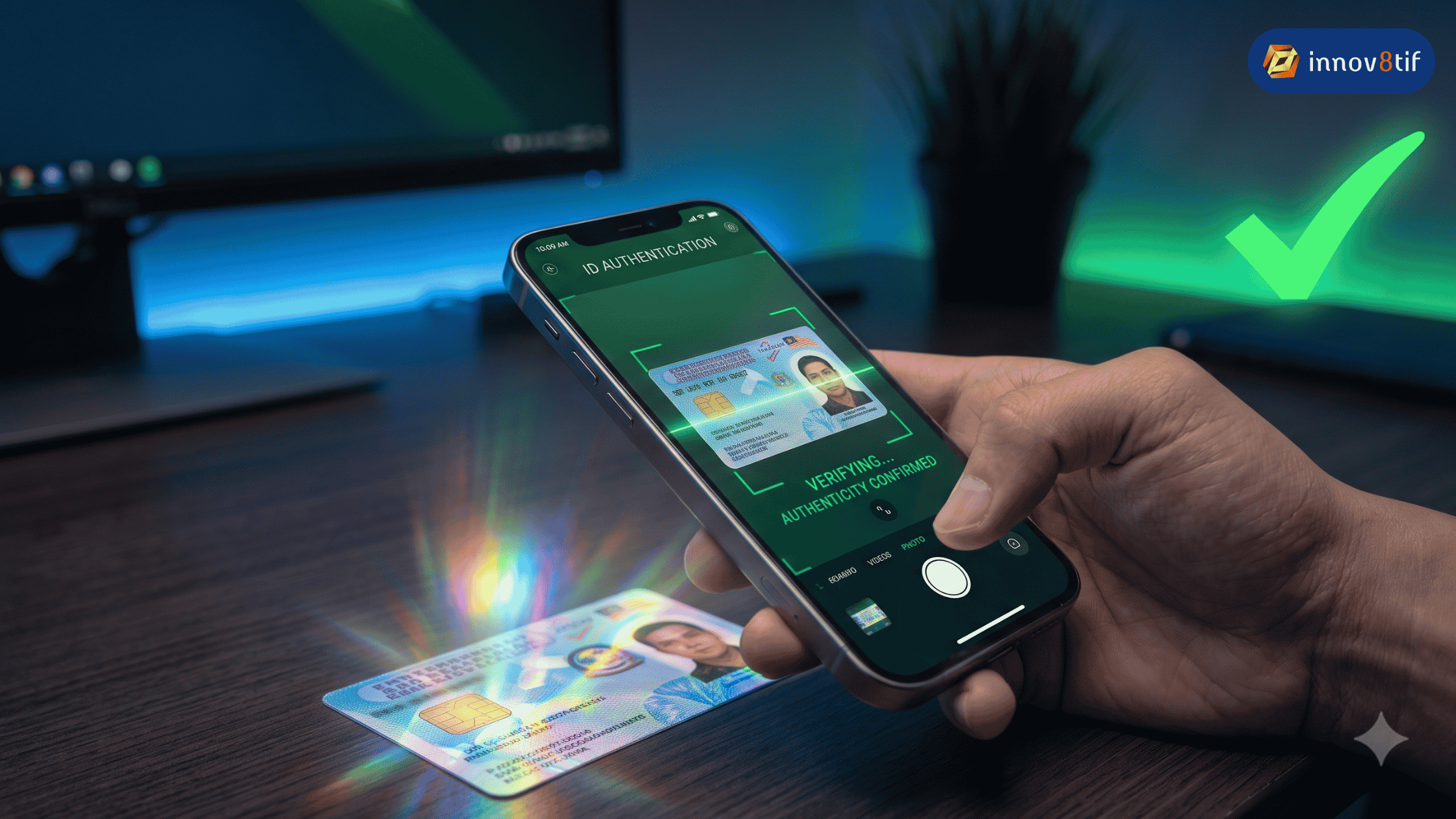
Spotting Fake IDs: How Hologram Tech Keeps Online Sign-Ups Safe

Fraud Prevention Best Practices: Staying Ahead in the Digital Age
Fraud has evolved into one of the most pressing challenges for businesses in the digital age, specifically in industries where trust and identity verification are critical, such as banking, insurance, telecommunications, and e-commerce. Fraudsters are after one thing, and one thing only: your perso

Fraud Prevention in the Digital Age: How AI is Transforming the Fight Against Scams
The onset of the digital age has ushered in remarkable innovations that we never would have thought possible a decade ago. Everything, from the way we work to the way we live our daily lives, has been drastically streamlined by technological advances. However, this progress comes with a double edge